Super Donkey Kong 2 (Donkey Kong Country 2: Diddy's Kong Quest) — The 102% Deep Guide: Every World, Every Coin, Every Boss
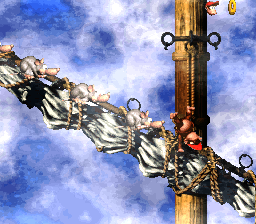
Donkey Kong has been kidnapped, and this time the heroes are the sidekick and the newcomer. Super Donkey Kong 2 — released overseas as Donkey Kong Country 2: Diddy's Kong Quest — took everything the first game did and buried it under secrets: 75 Kremkoins, 40 DK Coins, a toll-keeper guarding a hidden world, and a completion counter that famously stops at 102%. This guide maps the whole island: all eight worlds stage by stage, the full coin economy, every Animal Buddy and Kong facility, and a boss-by-boss strategy table.
Quick Facts
| Item | Detail |
|---|---|
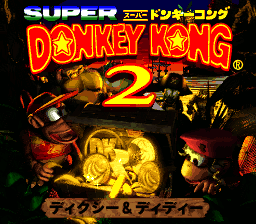
| Japanese title | スーパードンキーコング2 ディクシー&ディディー (Super Donkey Kong 2: Dixie & Diddy) |
| Overseas title | Donkey Kong Country 2: Diddy's Kong Quest |
| Platform | Super Famicom / Super NES |
| Release date (Japan) | 21 November 1995 |
| Release date (North America) | Early December 1995 — sources differ (20 November, 1 December and 4 December are all reported; see note below) |
| Release date (Europe) | 14 December 1995 |
| Developer | Rare |
| Publisher | Nintendo |
| Genre | Side-scrolling action / platformer |
| Players | 1–2 (alternating) |
| ROM size | 32 Mbit (4 MB) (Japanese Version 1.0) |
| Save system | Battery-backed SRAM; progress is saved at Kong Kollege |
| Composer | David Wise |
A note on dates: the Japanese launch date of 21 November 1995 is consistent across Japanese and English references. The North American date is genuinely inconsistent between sources — English Wikipedia itself flags that reports vary between 20 November and 4 December 1995, while Japanese references give 1 December. Rather than pick one silently, this article lists the region as "early December 1995" and keeps the discrepancy visible.
Overview
Kaptain K. Rool — King K. Rool in pirate dress — has kidnapped Donkey Kong and demands the entire banana hoard as ransom. Diddy Kong, the first game's sidekick, sets out with his girlfriend Dixie Kong, a newcomer whose ponytail changes how the game plays: hold the attack button in mid-air and Dixie's Helicopter Spin slows her fall, turning fatal-looking gaps into controlled glides. Diddy is faster on the ground and rolls through enemies in a cartwheel; Dixie is safer in the air. With both Kongs together you can also Team Up — lift your partner and throw them to reach ledges, switches and Bonus Barrels that neither Kong can reach alone.
The adventure crosses Crocodile Isle, the Kremlings' home turf, through eight worlds of pirate ships, lava caves, swamps, a derelict amusement park, a haunted gulch, a castle keep and a flying airship — plus a ninth destination hidden underneath the island itself. The pre-rendered SGI graphics of the first game return, denser and moodier, and David Wise's score moves from jungle percussion to some of the most admired music on the system (the Bramble Blast theme, "Stickerbush Symphony," is the famous example).
Structurally, this is two games stacked on top of each other. The surface game — clear 39 stages and eight boss encounters — is a tough, excellent platformer. The game underneath is a scavenger hunt: every regular stage hides one to three Bonus Areas and exactly one DK Coin, and the spoils feed a toll system that opens the Lost World. Finishing that second game is what the 102% counter measures.
Why It Still Matters
The first Donkey Kong Country sold spectacle; the second sold depth. DKC2 is routinely cited as the peak of the trilogy because its secrets are not decoration — they are the progression system. Kremkoins buy real levels. DK Coins feed a hero ranking judged by Cranky Kong. The "!" mark and DK Coin icon beside a stage name turn the map itself into a checklist, an idea that became standard in platform games afterwards.
It also refined the buddy system into level design: whole stages are built around a single Animal Buddy's movement — a spider who prints his own platforms, a parrot who turns the game into a shooter, a snake whose jump arc is the level. Modern re-releases (Virtual Console, Nintendo Switch Online) keep bringing new players to it, and the 102% run remains a rite of passage: difficult, fair, and completely self-contained. No downloadable content, no patches — the whole hunt was on the cartridge in 1995.
Highlights
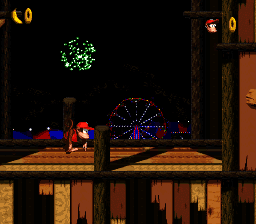
- Two Kongs, two physics. Diddy's speed and cartwheel versus Dixie's glide. Many secrets assume you will switch deliberately, and Team Up throws open routes that jumps cannot reach.
- A real economy of secrets. Bonus Areas pay Kremkoins; Kremkoins pay Klubba's toll; the toll opens the Lost World; the Lost World pays out the last DK Coins. Every collectible does something.
- Animal Buddy stages. Seven buddies, several of whom headline entire levels (Squawks's Shaft, Rambi Rumble, Web Woods, Animal Antics) instead of appearing as brief power-ups.
- A boss roster with a ghost in it. The first boss, Krow, comes back from the dead as Kreepy Krow in World 5 — and the "boss" of World 6 is not a fight at all, but a rescue that lasts seconds before K. Rool snatches Donkey Kong away again.
Strategy Essentials
1. The Eight Worlds, Stage by Stage
Counts below are regular stages plus the world's boss/event stage. The full route is 39 regular stages and 8 boss/event stages — 47 map stages in total. (Some references, including English Wikipedia, describe the game as having "52 levels"; that figure does not match a stage-by-stage count of the map, so this article uses the counted breakdown and flags the difference rather than repeating the rounder number.)
| # | World | Regular stages | Boss / event stage | Boss |
|---|---|---|---|---|
| 1 | Gangplank Galleon | 5 | Krow's Nest | Krow |
| 2 | Crocodile Cauldron | 5 | Kleever's Kiln | Kleever |
| 3 | Krem Quay | 6 | Kudgel's Kontest | Kudgel |
| 4 | Krazy Kremland | 6 | King Zing Sting | King Zing |
| 5 | Gloomy Gulch | 5 | Kreepy Krow | Kreepy Krow |
| 6 | K. Rool's Keep | 6 | Stronghold Showdown | — (rescue event, no boss fight) |
| 7 | The Flying Krock | 1 | K. Rool Duel | Kaptain K. Rool |
| 8 | The Lost World | 5 | Krocodile Kore | Kaptain K. Rool (final) |
| Total | 39 | 8 |
Stage lists, in map order:
- Gangplank Galleon — Pirate Panic · Mainbrace Mayhem · Gangplank Galley · Lockjaw's Locker · Topsail Trouble. A pirate ship: decks, rigging and one flooded hold that teaches swimming. The gentlest world, and the one to farm lives and Banana Coins in later.
- Crocodile Cauldron — Hot-Head Hop · Kannon's Klaim · Lava Lagoon · Red-Hot Ride · Squawks's Shaft. Lava country. Lava Lagoon's water is only swimmable while Clapper cools it; Squawks's Shaft is the first full flight stage.
- Krem Quay — Barrel Bayou · Glimmer's Galleon · Krockhead Klamber · Rattle Battle · Slime Climb · Bramble Blast. A drowned swamp and the game's first bramble maze (Bramble Blast, home of "Stickerbush Symphony"). Slime Climb races a rising Snapjaw up a mast.
- Krazy Kremland — Hornet Hole · Target Terror · Bramble Scramble · Rickety Race · Mudhole Marsh · Rambi Rumble. The Kremlings' ruined amusement park: hornet hives, two roller-coaster stages, a second bramble stage, and a Rambi showcase.
- Gloomy Gulch — Ghostly Grove · Haunted Hall · Gusty Glade · Parrot Chute Panic · Web Woods. Ghost ropes that blink in and out, a haunted coaster chased by Kackle, wind-blasted cliffs, and Squitter's web-weaving finale. Parrot Chute Panic is the exception stage: it has no Bonus Areas and no KONG letters — just survive the descent.
- K. Rool's Keep — Arctic Abyss · Windy Well · Castle Crush · Clapper's Cavern · Chain Link Chamber · Toxic Tower. The castle: ice, rising floors, a crushing-floor set piece, and Toxic Tower's rising poison climb through three Animal Buddies. Stronghold Showdown at the top is a short rescue scene, not a battle — and it still pays a Kremkoin.
- The Flying Krock — Screech's Sprint. One stage: a bramble race against Screech as Squawks, then the K. Rool Duel on deck.
- The Lost World — Jungle Jinx · Black Ice Battle · Klobber Karnage · Fiery Furnace · Animal Antics. Five of the hardest stages in the game, one per environment, ending at Krocodile Kore, the island's power source and the true final battle.
2. Bonus Areas and Kremkoins: The 75-Coin Economy
Every Bonus Area is a short timed challenge entered from a hidden Bonus Barrel, a breakable wall, or a cannon fired with a cannonball. There are exactly three challenge types in the SNES version:
| Bonus type (SNES title card) | Objective | Notes |
|---|---|---|
| Find the Token! | Reach the Kremkoin at the far end before time runs out | Renamed "Find the Kremkoin!" in the GBA version |
| Destroy Them All! | Defeat every enemy in the room to make the Kremkoin appear | The GBA version adds an on-screen enemy counter; the SNES version makes you count yourself |
| Collect the Stars! | Collect the required number of stars to make the Kremkoin appear | A few rooms (e.g. in Haunted Hall) contain more stars than required |
The arithmetic that drives the whole game:
| Source | Count |
|---|---|
| Bonus Areas in the 34 regular stages of Worlds 1–7 (1–3 per stage) | 68 Kremkoins |
| First-time clears of the five world bosses (Krow, Kleever, Kudgel, King Zing, Kreepy Krow) | 5 Kremkoins |
| Stronghold Showdown (World 6 event stage) | 1 Kremkoin |
| K. Rool Duel (World 7) | 1 Kremkoin |
| Total Kremkoins in the game | 75 |
Replaying a completed Bonus Area shows its Kremkoin with a check mark and pays nothing — the total is fixed. A stage name gains a "!" on the map when all of its Bonus Areas are done. One documented curiosity: a specific sequence of entering and leaving K. Rool's cabin in Pirate Panic without taking the 1-Up balloon, then collecting it on a return visit, makes a single Kremkoin worth all 75 appear in the cabin. It is a genuine in-game trick, but it shortcuts the entire toll system — most 102% hunters save it for after a legitimate clear.
As a worked example of the per-stage spread, Krazy Kremland's 11 Bonus Areas break down as: Hornet Hole 3, Target Terror 2, Bramble Scramble 1, Rickety Race 1, Mudhole Marsh 2, Rambi Rumble 2.
3. DK Coins: All 40, and Where the Idea Hides Them
Cranky Kong has hidden one large DK Coin (DK Hero Coin) as a test of heroism. The total is 40, and — despite what some older guides claim — they are not simply "one in every stage":
| Source | Count | How they work |
|---|---|---|
| Regular stages, Worlds 1–7 | 34 (one per stage) | Hidden in the stage itself: behind walls, above ceilings, on risky detours, or earned — Rickety Race's coin, for example, is awarded only for finishing the coaster race in first place |
| Lost World stages | 5 (one per stage) | Each Lost World stage's single Bonus Area pays a DK Coin instead of a Kremkoin |
| Krocodile Kore | 1 | Awarded for completing the final battle area |
| Total | 40 |
Reading the map helps: a DK Coin icon beside a stage or world name means that area's coin(s) are secured, just as "!" tracks Bonus Areas. Two cautions for guide-users: a widely copied GameFAQs "DK Coin guide" claims 68 DK Coins and describes collecting photographs for a scrapbook — that is the Game Boy Advance version's system, not the SNES game's, and its numbers do not apply here. Likewise, treat any source that puts a DK Coin "in a bonus room" everywhere with suspicion: in the SNES version that arrangement applies to the five Lost World stages only.
4. The Lost World and the Road to 102%
Klubba, a massive Kremling who openly dislikes K. Rool, guards the Lost World from Klubba's Kiosk. There are five kiosks — one each in Crocodile Cauldron, Krem Quay, Krazy Kremland, Gloomy Gulch and K. Rool's Keep (none in Gangplank Galleon or The Flying Krock). Each kiosk is wired to one specific Lost World stage in the SNES version, and each charges 15 Kremkoins, paid once:
| Kiosk location | Lost World stage it opens |
|---|---|
| Crocodile Cauldron | Jungle Jinx |
| Krem Quay | Black Ice Battle |
| Krazy Kremland | Klobber Karnage |
| Gloomy Gulch | Fiery Furnace |
| K. Rool's Keep | Animal Antics |
Five kiosks × 15 Kremkoins = 75 — the entire supply. Opening everything therefore requires every Bonus Area and every progression Kremkoin; there is no slack. Clear all five Lost World stages and Krocodile Kore appears for the true final battle: a single cannonball into K. Rool's blunderbuss ends it, Crocodile Isle sinks, and the best ending plays.
The 102% breakdown. The percentage rises for: clearing every stage and boss/event stage (including the Lost World and Krocodile Kore), completing every Bonus Area (all 75 Kremkoins earned), collecting all 40 DK Coins, and visiting each of the Kong family facilities at least once. Two things do not count, despite looking like collectibles: the KONG letters (they pay an extra life per set, nothing more) and Swanky's quiz winnings. If your counter stalls at 101%, the usual missing pieces are an unvisited facility, one stage's unfinished Bonus Areas (check for missing "!" marks), or the Krocodile Kore DK Coin.
5. Animal Buddies
Seven buddies appear in the SNES version — five you ride or transform into, and two who help without being ridden. (Quawks, Squawks's silent relative from the first game, does not return as a separate buddy here; Flapper, a blue parrot who can only descend, assists in Parrot Chute Panic.)
| Buddy | Role | Where they matter most |
|---|---|---|
| Rambi the Rhinoceros | Charge attack smashes enemies and breakable walls; a held-button supercharge breaks special doors to Bonus Areas. Can stomp spiky Zingers safely | Pirate Panic (first appearance), Rambi Rumble, Castle Crush, Animal Antics |
| Enguarde the Swordfish | Underwater speed and a lunging bill attack; supercharge breaks underwater walls | Lockjaw's Locker, Arctic Abyss, Animal Antics |
| Squawks the Parrot | Carries the Kongs in flight and spits eggs/nuts as projectiles — now a fully playable character, not just a lamp-holder | Squawks's Shaft, King Zing Sting (the boss is fought as Squawks), Screech's Sprint, Toxic Tower |
| Rattly the Rattlesnake | Enormous vertical jumps, including a charged super-jump; bounces on enemies others can't touch | Topsail Trouble, Gusty Glade, Krockhead Klamber sections |
| Squitter the Spider | Fires attack webs at enemies and platform webs you can stand on — he builds his own route, but cannot jump on enemies | Web Woods, Toxic Tower, Animal Antics |
| Clapper the Seal (not rideable) | Jump on him and he breathes on the water: cooling lava-hot water to swimmable, or freezing water into a walkable surface | Lava Lagoon, Clapper's Cavern |
| Glimmer the Anglerfish (not rideable) | His light illuminates an otherwise pitch-black stage | Glimmer's Galleon — his only stage |
The design rule to remember: an Animal Crate or Animal Barrel in a stage is never decorative. If a buddy is offered, either the stage's route or one of its secrets is built around that buddy's one special verb — charge, lunge, fly, bounce, build, cool or glow.
6. Kong Family Facilities and Currencies
Three currencies circulate, and confusing them is the classic beginner error: Banana Coins pay the Kong family's small fees, Kremkoins pay only Klubba, and DK Coins are a score, never spent.
| Facility | Keeper | Service | Cost notes |
|---|---|---|---|
| Monkey Museum | Cranky Kong | Sells hints about Bonus Areas and DK Coins for the current world; also judges your DK Coin hero rank | Hints cost Banana Coins; prices vary by hint |
| Kong Kollege | Wrinkly Kong | Saves the game; also gives free gameplay advice | First save at each world's Kollege is free; later saves at the same Kollege cost Banana Coins (guides report a small fee — 1–2 coins depending on version/source, so keep a few spare) |
| Swanky's Bonus Bonanza | Swanky Kong | A three-question quiz show about the game; win extra lives (balloons) | Entry costs Banana Coins; winnings do not count toward 102% — but visiting does |
| Funky's Flights II | Funky Kong | Biplane Barrel flights back to any previously visited world — the backtracking tool for cleanup runs | First use of each world's airport costs 2 Banana Coins; that airport is free afterwards |
| Klubba's Kiosk | Klubba | Opens one fixed Lost World stage (see table in section 4) | 15 Kremkoins per kiosk, one time only |
Practical loop: save at Kong Kollege whenever you reach a new world (the first save is free), keep at least a couple of Banana Coins in reserve at all times, and use Funky's Flights for a dedicated cleanup pass per world once you know which stages lack "!" marks or DK Coin icons. Note that The Flying Krock has no Kong Kollege — make your last save in K. Rool's Keep before the endgame.
7. Boss Table: What to Throw, and How Often
Every boss is a pattern puzzle built around a single projectile. First victory over each of the five world bosses also pays a Kremkoin (see section 2).
| Boss (stage) | Weapon | Hits | Pattern and counter-strategy |
|---|---|---|---|
| Krow (Krow's Nest) | His own eggs | 4 eggs across two phases | Jump on a dropped egg to stop it, pick it up, and throw it at Krow. After two hits he shakes the nest and eggs rain down — survive the rain, then repeat for two more hits |
| Kleever (Kleever's Kiln) | Cannonballs | 6 | A living sword over a lava pool. Dodge fireballs, throw the cannonballs that drop in, and cross the pool on the hooks that appear after hits — three hits, a furious sword-charge phase, then three more |
| Kudgel (Kudgel's Kontest) | TNT Barrels | 6 | A huge Kremling whose ground-pounds shake the arena and whose club smashes barrels you are holding. When he leaps, a TNT Barrel drops — grab it and hit him before he lands on you; keep moving, never stand under the jump shadow |
| King Zing (King Zing Sting) | Squawks's eggs | 9 on the boss, plus 4 guards | Fought entirely as Squawks. Shoot the red stinger from behind or below (6 hits), then shoot the four yellow Zingers shielding his shrunken form before they regenerate, then land 3 final hits while dodging his charges |
| Kreepy Krow (Gloomy Gulch boss stage) | Barrels | 3 | Krow's ghost. Bounce on the one solid (non-ghost) Mini-Necky to make a barrel appear, carry it up the rope route as eggs fall, and throw it when he swoops — one hit per climb, three climbs total |
| Stronghold Showdown | — | — | No fight: you reach the captive Donkey Kong, K. Rool hauls him up to The Flying Krock, and the stage ends — with a Kremkoin for your trouble |
| Kaptain K. Rool (K. Rool Duel) | Cannonballs into his blunderbuss | 9 | He fires cannonballs and coloured gas clouds (effects include slowed movement, reversed controls and invisibility on his part). When he tries to vacuum you in with the blunderbuss, throw a cannonball into the barrel of the gun. Nine times, in three escalating rounds |
| Kaptain K. Rool (Krocodile Kore) | One cannonball | 1 | The true final battle is a single exchange: plant one cannonball in the blunderbuss and the island's core does the rest. Clearing it awards the 40th DK Coin |
Two general rules cover almost every death in these fights: the projectile supply is infinite but slow (wait for the drop, don't chase the boss), and every boss telegraphs its charge — the safe throw window is after the attack animation, not during it.
8. Field Notes and Small Systems
- Warp Barrels. Every non-boss stage in Gangplank Galleon and Crocodile Cauldron hides an invisible Warp Barrel near its start that skips most of the stage. Wonderful for farming runs; disastrous for completion percentages, since warped stages still need their Bonus Areas and DK Coin collected separately.
- The goal target. At each stage's end, land on the target from higher up to spin better prizes — up to an extra-life balloon. Dropping Dixie from a Team Up throw is the reliable way to hit the top prize band.
- Hidden modes. On the game-mode select screen, highlighting TWO PLAYER CONTEST and pressing Down five times reveals a MUSIC TEST; five more reveals CHEAT MODE, where documented button sequences start you with 50 lives, or remove all DK Barrels for a self-imposed hard mode. (Sequences are recorded in Japanese guide sources; they belong to the SNES version — do not assume they carry over to the GBA remake.)
- Lives economy. 100 bananas = 1-Up, a full K-O-N-G set = 1-Up, balloons pay 1/2/3 lives by colour (red/green/blue). Swanky's quizzes and the Pirate Panic farming routes exist because the late game — Toxic Tower, Animal Antics — will spend whatever you bring.
SNES vs. GBA: Keep the Versions Separate
The 2004 Game Boy Advance remake is a close port with real differences, and guides for it will quietly corrupt an SNES run if mixed in. The headline changes: an additional boss, Kerozene, appears in K. Rool's Keep (the SNES world has no boss fight); a new buddy, Expresso II, hosts racing minigames; DK Coins are tied to a photograph/scrapbook system rather than the SNES arrangement in section 3; "Find the Token!" is renamed "Find the Kremkoin!"; Destroy Them All! rooms gain an enemy counter; and Klubba's kiosks behave differently for Lost World access. Everything in the tables above describes the SNES / Super Famicom original only.
Who It's For
- Players returning via Nintendo Switch Online or Virtual Console who cleared the game as kids but never saw the Lost World.
- Completionists who want a fixed, finite hunt: 75 + 40 collectibles, no randomness, every one of them placed by hand.
- Platformer fans interested in how level design teaches: DKC2's stages introduce one idea, test it, then combine it — a masterclass that still reads clearly thirty years on.
How to Play It Today
- Nintendo Switch Online — the Super Famicom / SNES version is available in the Super Nintendo Entertainment System library for subscribers, with suspend points and rewind that make the harder Bonus Areas far less punishing to practise.
- Virtual Console — the game was released for Wii, Wii U and New Nintendo 3DS Virtual Console (stores now closed to new purchases, but existing copies still play).
- Game Boy Advance cartridge — the 2004 remake; a fine version, but see the version differences above before following any guide (including this one).
- Original cartridge — Super Famicom / SNES copies are common on the second-hand market. Check that the battery save still holds before starting a 102% run.
Find the original Japanese cartridge
Disclosure: The Rakuten and Yahoo! Shopping links are standard shopping links. Enkeisha does not earn a commission from purchases made through these links.
Find original hardware editions on eBay
As an eBay Partner Network affiliate, Enkeisha may earn a commission from qualifying purchases made through these links.
Search eBay listings (affiliate link)
Check the language, region, hardware compatibility, condition and authenticity before buying. Search results may include reproductions; links do not endorse individual sellers.