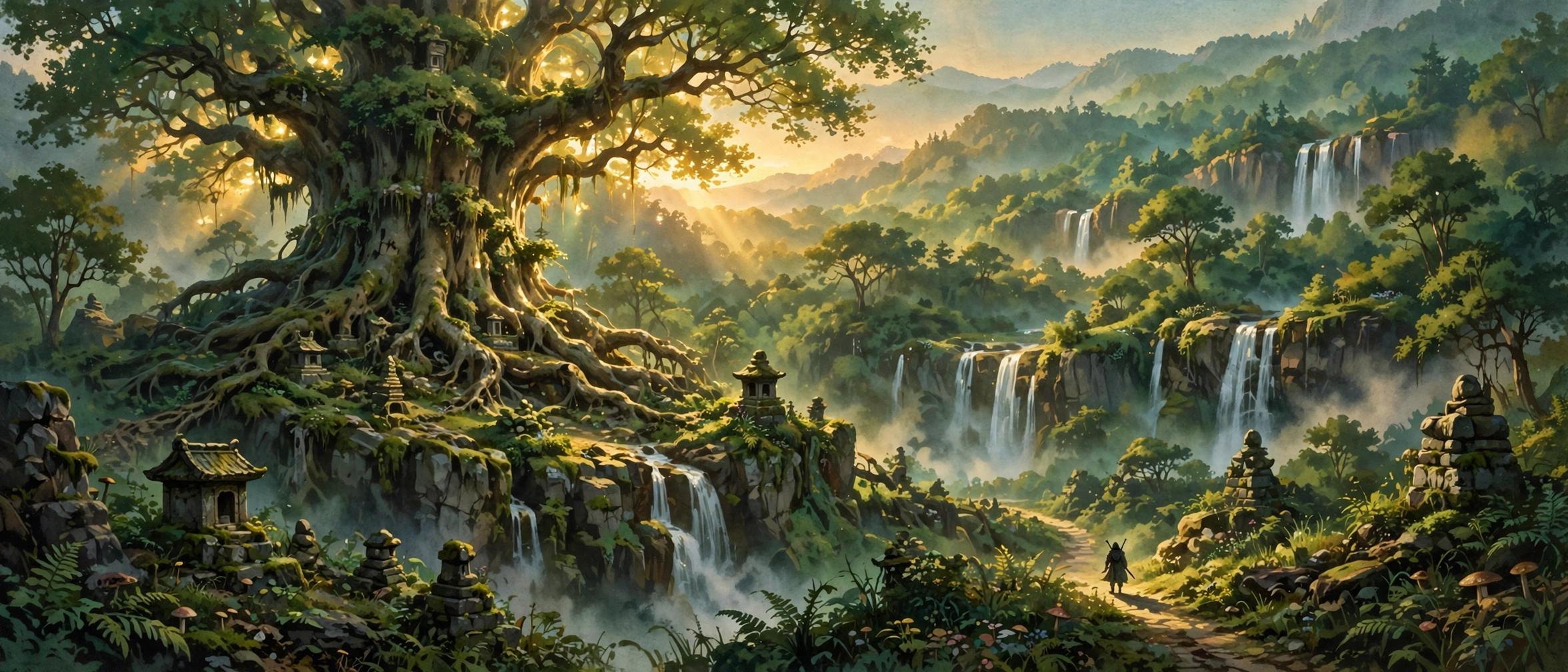
There are two different games called Ys IV, and this is the bigger, stranger one: a full CD-ROM production built by Hudson Soft under licence from Falcom, with voiced cutscenes, a red-book soundtrack and a continent twice the size of anything Adol had walked before — originally released only in Japan, for the PC Engine Super CD-ROM². It is also the game that took the series back to what it was: top-down bump combat, magic wands, and a hero who solves most problems by walking into them at the correct angle. This is a deep strategy guide to the Dawn of Ys: how its combat really works, the magic system it revived from Ys II, the route through Celceta in the order the game actually opens it, and the level-based rule that settles almost every boss fight.
Quick facts
| Item | Detail |
|---|---|
| Original title | イースIV The Dawn of Ys (Īsu IV: The Dawn of Ys) |
| English title | Ys IV: The Dawn of Ys |
| Platform (original release) | PC Engine Super CD-ROM² (requires the Super CD-ROM² system) |
| Release date (Japan) | December 22, 1993 (Japan only; no official overseas release) |
| Developer / Publisher | Hudson Soft, under licence from series creators Nihon Falcom / Hudson Soft |
| Music | Composed by Falcom Sound Team J.D.K.; CD arrangements by Ryo Yonemitsu |
| Genre | Action role-playing game (top-down bump combat, single character) |
Overview
Two years after the events in Esteria, Adol Christin returns to the town of Minea — and is almost immediately sent back out to sea. The fortune-teller Sara directs him to Celceta, a forested land on the Eresia mainland where monsters are multiplying under the influence of a group calling itself the Clan of Darkness. Adol arrives at the port of Promarock, is promptly stripped of his equipment by the Romun Empire's occupying soldiers, and has to rebuild himself from nothing in a land of five elemental villages, sunken shrines and a civilisation that remembers things the rest of the world has forgotten.
The Dawn of Ys was an unusual production. Falcom, short-staffed at the time, supplied a scenario framework and the music and licensed development out — Hudson, which had made the successful PC Engine versions of Ys I–III, built this version, while Tonkin House simultaneously built a different Ys IV, Mask of the Sun, for the Super Famicom. The two games share a setting and a premise and almost nothing else. Hudson's version was treated as the leading one at release; Falcom's later official timeline favoured the other version, and both were eventually superseded as canon by the remake Ys: Memories of Celceta. None of that changes what is on this disc: the longest, most densely produced 2D Ys of its era.
Play returns to the formula of Ys I and II after the side-scrolling detour of Ys III: a top-down view, combat by running into enemies, experience and gold from every kill, and a magic system built around equipable wands. What is new is scale and smoothness — Adol can finally move diagonally, and the CD format carries voiced scenes, animated cutscenes and an arranged soundtrack throughout.
Why It Still Matters
The Dawn of Ys is the fullest expression of the original Ys design before the series reinvented itself as a party-based action RPG. Everything the first two games did, this does at greater length and with better dungeon design: warp-tile shrines that flip the screen and put you on the walls, a sinking desert, boss fights built as projectile patterns to be read rather than stats to be out-rolled. It is also a landmark CD-ROM production — in 1993, a fully voiced, fully arranged, console-exclusive action RPG of this length was a statement about what the format was for.
Its afterlife is part of the story. Because it never left Japan, it lived for years as the Ys that Western fans knew by reputation; a fan translation patch (text and dubbed audio) eventually made the PC Engine version playable in English, which is how much of its current audience found it. And for series followers, Celceta itself is the point: this is the game that first built the region that Memories of Celceta would later rebuild.
Highlights
- Bump combat, perfected. No attack button: angle, level and equipment decide everything, and diagonal movement makes the system smoother than it ever was on cartridge.
- Magic returns. The wand-based system of Ys II is back and expanded to six magics, including two spells new to this game (Freeze and Seeker, detailed below).
- A CD production in full. Voiced story scenes, animated cutscenes, and Ryo Yonemitsu's arrangements of the Falcom soundtrack across a 32-track disc.
- Dungeons with ideas. The Torie Shrine's screen-flipping warps, the sinking desert, and a late game that revisits earlier sacred sites inside a risen ancient city.
Strategy Essentials
1. Bump combat — the angle is the whole system
Adol attacks by walking into an enemy; whether the exchange favours you depends on three things, in this order: your level and equipment, the angle of contact, and your current HP management. Head-on collisions trade damage; striking an enemy off-centre — clipping its side rather than meeting it frontally — is how experienced players kill things that "should" be too strong. When a fight feels impossible, the intended answer in this series is almost never a trick: it is one more level. The classic rule of thumb from this game's own walkthrough tradition states it precisely — you can generally beat a boss when the most common enemies around it are giving you 10 EXP or less each, because by then your level is where the area expects it to be.
| Situation | What to do |
|---|---|
| Enemy kills you in a few hits | You are under-levelled or under-equipped for the area. Grind the approach enemies until their EXP yield feels trivial, then retry |
| You deal 0–1 damage to a boss | A story or equipment gate, not a skill issue: check for a missed sword/armour upgrade or a required item before grinding further — and for the final battle, see the El Doran requirement in the route notes below |
| Corridor fights keep trading damage | Stop walking head-on. Approach diagonally and clip enemies from the side |
| Boss fills the screen with projectiles | Read it as a pattern fight (several late bosses echo the Dark Fact style): keep moving, strike in the gaps, and in the late game use Shield magic (below) to hold a safe window while its MP lasts |
2. The magic system — six spells, including two new additions
Magic is equipped as wands — one wand at a time, in its own equipment slot alongside sword, shield and armour — and cast for MP with the I button; the attack magics (Fire and Freeze) can also be charged by holding the button. Bump attacks stay movement-based, so the choice in a hard fight is which wand to have equipped, not a separate combat stance. The returning system from Ys II gives you fireballs and the famous transformation into a Roo (a small monster form that lets you talk to enemies and swim in the right places). Two spells are new in this version, per the series' reference coverage. In total there are six magics, granted by the five loyal retainers and by Lefance:
| Magic | Effect | Where it earns its keep |
|---|---|---|
| Fire | Fireball projectiles from the equipped wand; can be charged for a stronger blast | Your default ranged answer to enemies too dangerous to bump |
| Transform (Alter / Roo) | Turn into a Roo monster | Dialogue with monsters and swimming passages, as in Ys II |
| Warp | Warp to towns and villages you have already visited | Cuts the backtracking in the flower chain and the endgame errands |
| Freeze (new in this game) | An ice projectile that freezes ordinary enemies solid; a frozen enemy shatters in one hit if you touch it. It can also solidify lava spouts | Clearing dangerous regular enemies and crossing the lava area — it is a field and regular-enemy tool, not a general boss answer |
| Seeker (new in this game) | Reveals what is hidden — it replaces the role of the Mask of Eyes from Ys I, without that item's drawback of making enemies invisible | Hidden passages and the late-game Serene sequence; if a door will not open in Serene, the walkthrough tradition points you back to the Celceta Flower errand (see route notes) |
| Shield | A light aura wraps Adol and blocks all attacks while MP lasts; granted by Lefance late in the game | The late boss fights — the PC Engine walkthrough tradition equips Shield for the Guruda fight and for the final battle |
The rings from Ys III also return as passive equipment, so your build is sword + shield + armour + ring + wand, and shopping decisions matter: in Ys, a new tier of equipment is a bigger power jump than a level.
3. The road through Celceta — the route in the order it opens
Spelling note: this game's place names circulate in several romanisations (Celceta/Selceta, Promarock/Promalock); the forms below follow the most common walkthrough usage. The shape of the journey does not change.
| # | Stage | What actually gates your progress |
|---|---|---|
| 1 | Minea (prologue) | Talk to Sara; the trip to Celceta is story-gated, nothing to grind yet |
| 2 | Promarock | You start with top-tier Cleria equipment from the previous adventure — and lose it to the Romun soldiers in a scripted capture. Re-equip from scratch, and reach about level 3 on the monsters outside before moving on |
| 3 | Arieda village / Abandoned Mine | The mine-and-village loop rebuilds your funds and introduces Dr. Flair's warp travel between settlements |
| 4 | Lava region / Slano's shrine | First real dungeon test; fire-area equipment checks apply |
| 5 | Celceta Forest / Yupel | Forest navigation; story party beats (Karna) begin |
| 6 | Laparo, the earth village / the castle | Mid-game equipment tier opens up |
| 7 | The sinking desert / Miyu's shrine | Desert movement gimmick: keep moving on sinking sand |
| 8 | Libra, the water village | The Celceta Flower errand chain starts here in earnest — flower-related items feed several later gates |
| 9 | The Celceta Flower | A fetch chain that pays off much later (including the Serene door problem noted in the magic table) |
| 10 | Return to Minea | The story folds back to Esteria before the mid-game tower |
| 11 | Darm Tower | A deliberate echo of Ys I's final dungeon — including a boss at the top who is not the real boss: the Keith Fact fight is a scripted hopeless battle interrupted by Feena and Reah, after which Gadis is the true opponent. Do not waste items trying to "win" the first phase |
| 12 | Serene, the moon village / Romun Castle | Seeker magic is central here; the Romun fortress sequence follows |
| 13 | The forest ritual and the endgame | Earlier sacred sites return inside the risen ancient city; the optional strongest equipment set (Leo's sword, armour and shield) can be won by sneaking back into the Romun fortress with a Clear Potion to turn invisible — an entirely missable, entirely optional detour. Leo's set is the strongest by raw stats, but it cannot substitute in the final battle (see the next row) |
| 14 | The final battle | You must have the El Doran sword, shield and armour equipped — the golden set your Cleria equipment is transformed into at Lefance's Shrine — or you will deal no damage at all. Leo's equipment will not cut it here, however strong it is elsewhere. Prepare the Power Ring and Shield magic as well before stepping in |
4. Difficulty, honestly stated
This is a longer game than Ys I and II combined, and its difficulty curve is equipment-shaped: when a new area hurts, the fix is usually the shop in the nearest village plus one level, in that order. Bosses are pattern fights; if a boss seems to demand perfect play for several minutes, one more level — and, late in the game, Shield magic while its MP holds out — will shorten it more than practice will. Save at every village — the game's backtracking (warps help, but the flower chain and the Serene sequence still send you across the map) means a death far from a save point is the real punishment this game deals.
Who It's For
For action RPG players who want the classic bump-combat Ys at its largest and most produced — and who are comfortable with a Japan-only release (a fan translation exists for this version). For series followers, it is the original Celceta and a genuinely different Ys IV from the Super Famicom one, not a port of it. Players who need a map, quest markers or an attack button should know this game has none of those; its pleasures are pattern-reading, routing and a superb CD soundtrack.
How to Play It Today
The original 1993 release was only in Japan, for the PC Engine Super CD-ROM², and there has never been an official overseas release. Separately from that original release, the PC Engine version was later distributed in Japan via Game Archives (PC Engine Archives) for PS3 and PSP from July 6, 2011, and is also listed for PS Vita. Playing it today therefore means either the Japanese disc on original hardware (a Super CD-ROM² setup or a PC Engine Duo-series machine, with second-hand discs circulating on the Japanese market) or the Game Archives version on its supported PlayStation hardware.
Find original hardware editions on eBay
As an eBay Partner Network affiliate, Enkeisha may earn a commission from qualifying purchases made through these links.
Search eBay listings (affiliate link)
Check the language, region, hardware compatibility, condition and authenticity before buying. Search results may include reproductions; links do not endorse individual sellers.