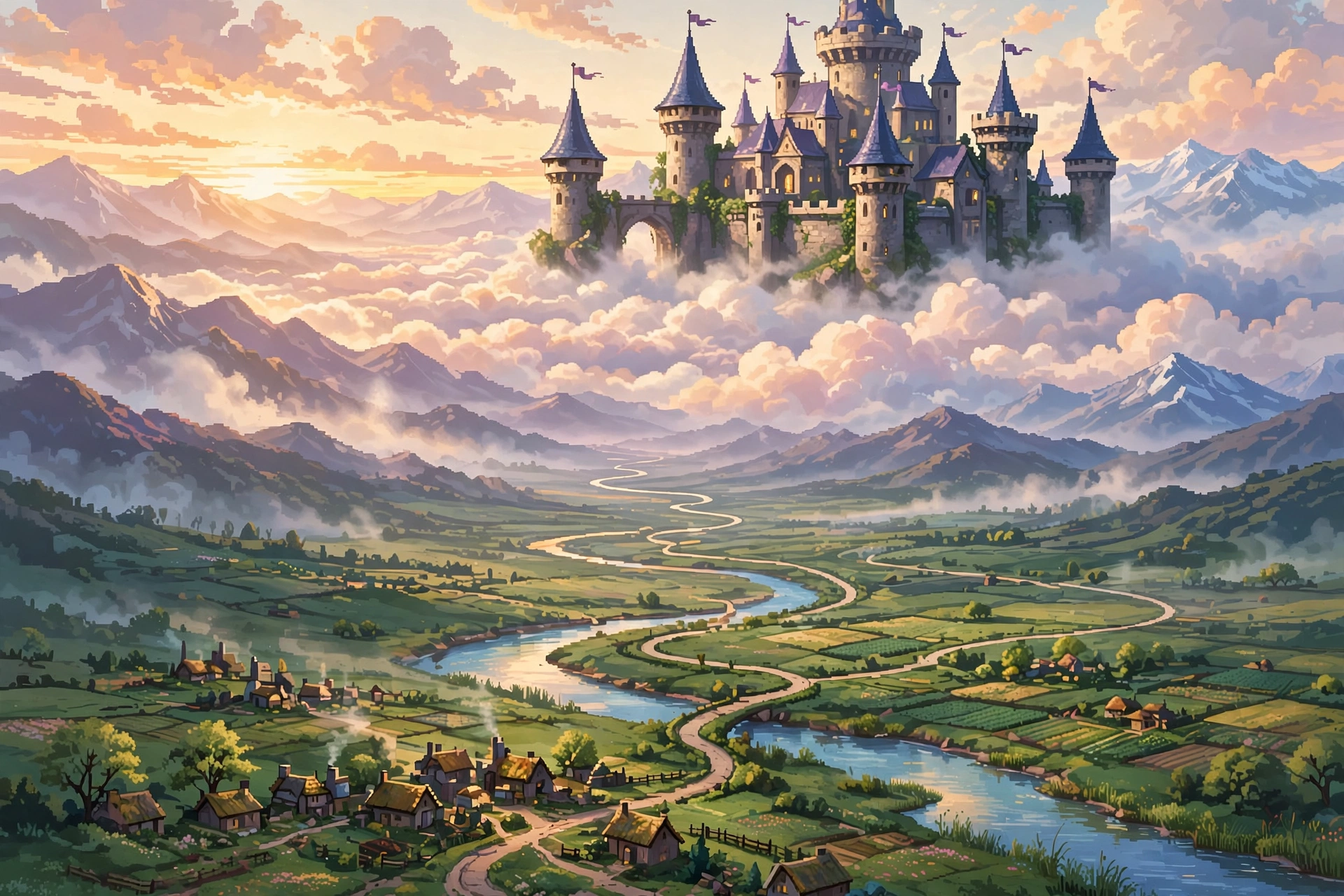
Most RPG heroes are born the day you press start and retire the moment the credits roll. The hero of Dragon Quest V is born in the game's opening minutes — literally — and you follow him from a small boy travelling at his father's side, through slavery, marriage and fatherhood, to the day his own children take up the sword beside him. Released for the Super Famicom in 1992, it was the first Dragon Quest to let defeated monsters join your party, and it built its entire story around a single audacious idea: one human life, played from birth to parenthood.
It was also invisible to most of the world for a long time. The original was never released outside Japan, and the first official English version arrived only with the Nintendo DS remake of 2009. This guide covers the 1992 original — and how its systems actually work, because the Super Famicom version differs from the remakes in ways that matter: a smaller monster roster, a three-person battle party, no board-game mini-game, and a post-game boss whose famous "reward" does not exist here at all.
Quick Facts
| Item | Detail |
|---|---|
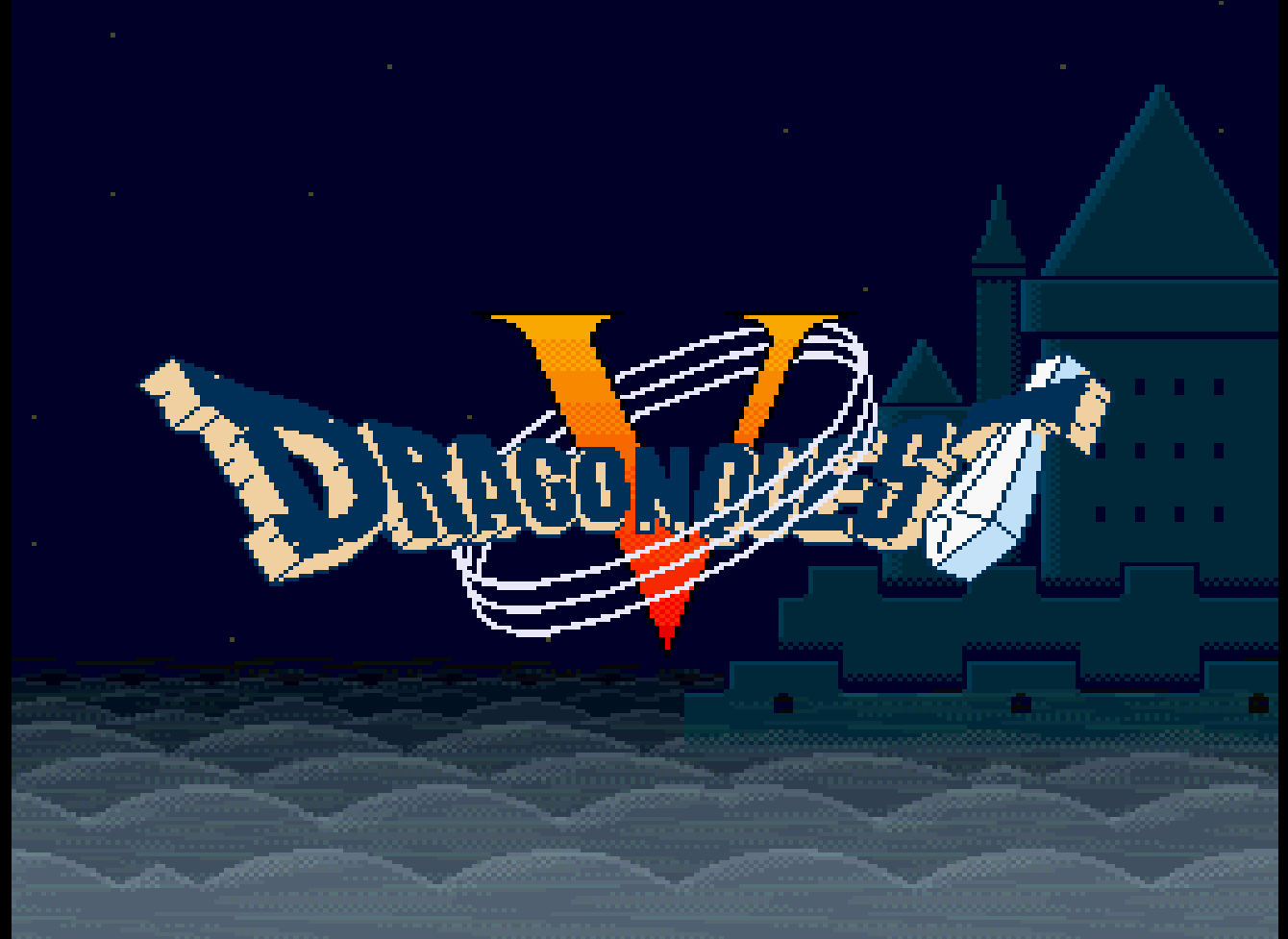
| Title (Japan) | Dragon Quest V: Tenkū no Hanayome (ドラゴンクエストV 天空の花嫁) |
| English title | Dragon Quest V: Hand of the Heavenly Bride (official title of the later DS remake; the Super Famicom original had no English release) |
| Platform | Super Famicom |
| Release (Japan) | September 27, 1992 |
| Developer | Chunsoft |
| Publisher | Enix |
| Genre | Role-playing game (turn-based) |
| Cartridge | 12 Mbit (1.5 MB) of ROM data, battery-backed save RAM |
| Structure | One hero's life in three generations (childhood / young adulthood I / young adulthood II) |
| Battle party | Up to 3 active members, plus reserves in the wagon |
| Series position | Second game of the Zenithian (天空) trilogy, following Dragon Quest IV |
A note on size: some English references list this cartridge as 16 Mbit. That figure comes from the size class declared in the cartridge header; the actual ROM data is 12 Mbit (1.5 MB). We use the measured figure here.
Overview
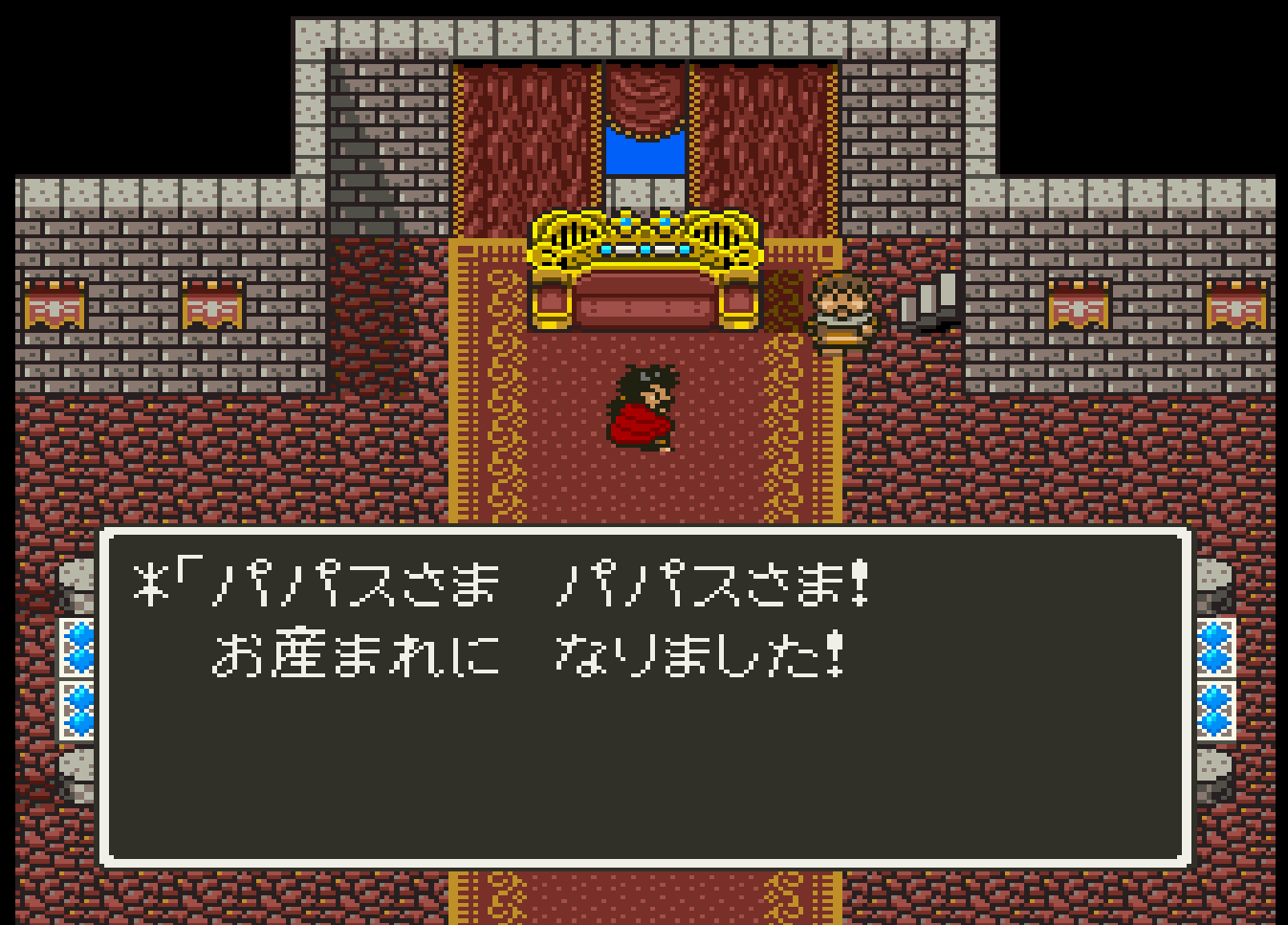
The story opens with a birth and a homecoming: Pankraz, a travelling swordsman, returns to the village of Whealbrook with his infant son, and the game then picks up the boy's life at age six. Father and son travel together — Pankraz is searching for the legendary hero and for his missing wife — and the child tags along through a haunted castle, a faerie village whose spring has been stolen, and a royal kidnapping. Then the first generation ends in disaster, and the game jumps ten years.
What follows is a structure no mainstream RPG had attempted at this scale. The second generation finds the hero grown, escaping a life of slavery, reuniting with the great sabrecat he raised as a cub, recovering the sword his father hid for him, and eventually facing the game's signature decision: whom to marry. The third generation jumps another eight years and completes the story's central twist — the hero himself is not the legendary hero of prophecy. His son is. The Zenithian equipment that no one else can even lift belongs to a boy who was not born when the journey began, and the final quest into the underworld of Nadiria is a family expedition: father, mother and twins, hunting the demon who took the children's grandmother.
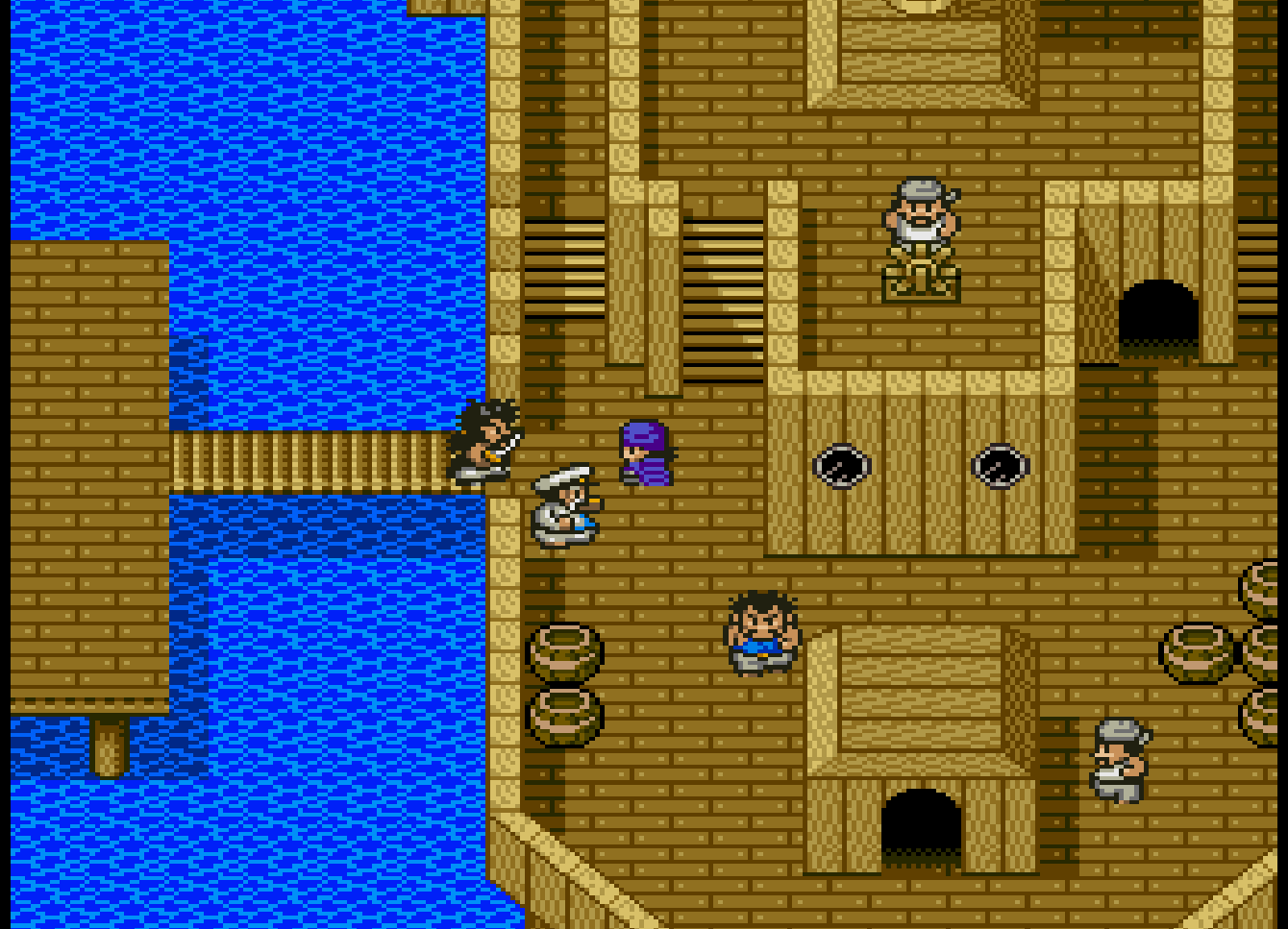
Around that story sit the systems. A day-and-night cycle changes who is in town and what can be bought. A horse-drawn wagon lets you swap party members in the field and unlocks the game's biggest idea: after certain battles, a defeated monster may get back up and ask to travel with you. The Dragon Quest IV tactics system returns, but — unlike the original IV — every ally can also be given direct orders for the whole game. There is a casino in Fortuna, a king on a southern island who trades rare equipment for the mini medals hidden all over the world, and, after the ending, a bonus dungeon the series had never had before.
Why It Still Matters
It invented, or normalised, several things the genre now takes for granted. Monster recruitment — defeating creatures and having them fight for you, with their own levels, equipment and spells — debuted here in 1992, years before monster-collecting became an industry, and is regularly cited as a forerunner of that whole genre. The multi-decade life story was equally radical: Dragon Quest V is still the reference point whenever a game tries to make you feel time passing, because it makes you live the gaps — the ten years of slavery happen to your character, between chapters you control.
And then there is the bride. The choice between Bianca and Nera (Flora in Japanese) is one of gaming's longest-running arguments, debated in Japan for over thirty years, precisely because the game refuses to make it a puzzle with a correct answer. It is a decision about what kind of life you want the hero to have had, dressed up as a decision about spell lists — and the strategy section below treats it that way on purpose.
Finally, the original itself matters. For English-speaking players the DS remake is "the" Dragon Quest V, but the Super Famicom version is a leaner, harder-edged game: three fighters instead of four, a tighter monster roster, no T'n'T boards, and a different post-game. It is the version Japanese players argued about in 1992, and remake advice can actively mislead you here.
Highlights
A life in three acts. Childhood wonder, a young man's losses and marriage, and a father's quest — the same world revisited at three ages, with towns, people and the hero's role in both changed by the years between visits.
Monsters as true party members. Recruited monsters are not pets or summons; they level up, equip weapons and armour, learn spells and breath attacks, and can carry a run. A Slime Knight recruited in the second generation can still be earning its place in the underworld.
The bride decision. One choice, made once, that changes your spell coverage, your equipment pipeline, your children's hair, and the emotional shape of the second half — and that players still cannot agree on three decades later.
A real post-game. After the ending, a hidden dungeon in Nadiria holds the best equipment in the game and Estark, a boss far stronger than the final boss — the first bonus dungeon in a mainline Dragon Quest.
Strategy Essentials
The three generations
| Generation | The hero | Where it centres on | The turning points |
|---|---|---|---|
| I — Childhood | A boy of six travelling with his father Pankraz | Whealbrook, the haunted castle at Uptaten, the Faerie Village, Coburg | The ghost castle adventure with Bianca; the stolen spring restored; Pankraz's search ends in tragedy and the hero is taken into slavery |
| II — Young adulthood (first half) | A young man, ten years later | Escape from the slave camp, Fortuna, Whealbrook Adit, Mostroferrato, Gotha | Buys the wagon and begins recruiting monsters; recovers the Zenithian Sword his father left; the bride choice; crowned King of Gotha; twins are born — then his wife is taken and he is turned to stone |
| III — Young adulthood (second half) | A father, eight years later | Freed by his own children; Helmunaptra, the Great Temple, Zenithia, Nadiria | His son proves to be the legendary hero and claims the Zenithian set; the family enters Nadiria to face Grandmaster Nimzo and free the hero's mother |
Childhood ──(10 years)──► Young man ──(8 years)──► Father
  Gen. I                    Gen. II                  Gen. III
travels with Pankraz        slavery → marriage       travels with his children
Practical consequences: equipment and money carry across the jumps, but party members do not — each generation rebuilds your team, which is why recruited monsters (stored and reclaimable) matter so much. Items held by departing companions are forwarded to the depository in Fortuna, so check it whenever someone leaves.
Party basics in the Super Famicom version
Battles use three active members; everyone else rides in the wagon and can be swapped in on the field screen where the wagon is allowed — but several dungeons bar the wagon entirely, and there your three must be self-sufficient. Give manual orders in boss fights: the tactics AI is serviceable for random encounters, but it will not time a buff or a revive the way the post-game demands. Keep at least one reliable healer or a deep stock of healing items in the active three at all times, and remember that recruited monsters are full party members who need real equipment — budget for them when you shop.
The bride choice: Bianca or Nera
Midway through Generation II, the hero must choose a bride: Bianca, his childhood friend, or Nera (Flora in Japanese), the daughter of the wealthy Rodrigo Briscoletti. There is no third candidate in this version — Debora was added only in the DS remake. Neither choice locks you out of the ending, and the famous Zenithian Shield is given to the hero by Rodrigo after his trials regardless of whom he marries. What actually differs:
| Bianca | Nera (Flora) | |
|---|---|---|
| Who she is | Childhood friend; your partner in the Generation I ghost-castle adventure | Rodrigo Briscoletti's daughter; met as an adult during the marriage trials |
| Spell character | A pure fire mage: the full Frizz line up to Kafrizzle (Lv33) and the Sizz line up to Kasizzle (Lv27), plus Oomph, Snooze, Dazzle, Kasap and Bounce | A broader, more complete list: everything Bianca's line is missing — Heal and Midheal, Kaboom (the strongest all-enemy spell) and Tick-tock (swaps day and night); she also reaches Kafrizzle, but lacks the entry-level Frizz and Sizz |
| Healing | None — she learns no recovery spells at all | Midheal makes her a genuine second healer |
| Equipment note | The only bride who can wear the Metal King Helm, the best helmet in the game | Cannot wear the Metal King Helm |
| Family support | None — the hero's family makes its own way | Marrying into the Briscoletti family brings support from Rodrigo as the journey continues, including gold and high-grade armour (a Water wraith and a Sacred armour are among the pieces that reach you) |
| The children | Twins with blond hair | Twins with blue hair |
| The twins themselves | Identical either way — same stats, spells and equipment; only the hair colour (and some scenes and dialogue) change | Identical either way |
How to decide, without a verdict: pick Nera if you want the smoother run — a second healer, the game's best group-clearing spell, and free equipment arriving exactly when Generation II gets expensive. Pick Bianca if you want the story the game was framed around — the childhood friend from the ghost castle, a dedicated fire specialist whose damage line is complete from the first spell to the last, and the only bride who can use the best helmet. Save before the choice; it cannot be revisited without replaying Generation II.
Monster recruitment: how it works, and who is worth chasing
Recruitment opens in Generation II. Buy the wagon (300G, sold at night in Fortuna) and speak to Monty, the monster grandad in Fortuna, who stores and releases your monsters. From then on, when a battle ends, the last monster defeated may rise and ask to join. The rules that govern it:
- Fixed odds per species, in tiers from generous (1/2) down to brutal (1/256). The first of a species is the easiest; the second and third copies of the same species (the maximum is three) are progressively harder to win.
- A hero-level gate per species. If the hero's level is below a species' requirement, it will never join, however often you win.
- Some areas disable recruitment entirely — no monster will offer to join in certain late-game locations, however long you grind there. If nothing ever joins, you are probably in one of those areas.
- The Super Famicom roster is smaller than you have read. Only 40 species can be recruited from random encounters here (plus Saber, the great sabrecat, who joins through the story). The remakes raise this to roughly 70. Guide counts for the original vary between 40 and 42 depending on whether Saber and the post-game-only Hellbattler are counted in — the table below uses only species verified as recruitable in this version.
| Monster (JP name) | First-recruit odds | Hero Lv needed | Where to hunt | Why it earns a wagon slot |
|---|---|---|---|---|
| Slime (スライム) | 1/2 | 7 | Almost everywhere early | The mascot is a long-term project: frail for most of the game, it eventually learns high-end support and, very late, a top-tier flame breath |
| Slime Knight (スライムナイト) | 1/4 | 7 | Fortuna and Coburg areas | The backbone of Generation II — fights respectably and heals, eventually learning Fullheal for complete single-target healing |
| Healslime (ホイミスライム) | 1/32 | 7 | Abovitall Tower, Faerie Lea area | A dedicated healer before your human cast can cover the role |
| Golem (ゴーレム) | 1/4 | 25 | Lofty Peak area | A wall of HP and attack that can heal itself with Meditation; the standard late-game tank |
| King Slime (キングスライム) | 1/64 | 10 | Helmunaptra area | A spell-slinging support slime with revival and barrier magic |
| Cureslime (ベホマスライム) | 1/64 | 16 | Dominicus' Dominion and Cataract Caves areas | The strongest healing line available to a monster companion |
| Great Dragon (グレイトドラゴン) | 1/64 | 35 | Nadiria | Breath-weapon artillery, climbing from flames to the game's fiercest breath attacks |
| Liquid Metal Slime (はぐれメタル) | 1/256 | 20 | Central continent, Gotha Path, Nadiria | A near-untouchable tank — but it caps at Level 8 and is a shield, not a sword. A trophy recruit |
| Killing Machine (キラーマシン) | 1/256 | 34 | Nadiria, the bonus dungeon | Acts once per turn as a recruit — the enemy version's two-hit pattern does not carry over. Its value is high, consistent physical attack power and strong resistances |
| Hellbattler (ヘルバトラー) | 1/256 | 43 | The post-game bonus dungeon only | The ultimate recruit of the original: Kaboom, Kafrizzle and searing breaths. Japanese data references list it as recruitable only inside that dungeon |
Two version traps to avoid. The ordinary Metal Slime cannot be recruited in the Super Famicom version at all — remake guides will send you hunting for one in vain — and neither can the Archdemon; both joined the roster only in the remakes. Likewise, there is no Starkers (プチターク) here: Estark has no son in this version, for reasons the post-game section explains.
Casino, sugoroku — and mini medals
The casino (Fortuna). The large casino in the centre of Fortuna offers slot machines and a monster arena. Its headline prizes are the Metal King Sword and the Gringham Whip — among the best weapons in the game — priced for the very long term. Treat the casino as a savings project, not a shortcut: set a token target, save before a session, and do not let it eat the gold your next town's equipment needs. There is only this one casino in the original; the remakes' casino ship does not exist here.
Sugoroku (T'n'T boards): not in this version. Board-game fields with dice tickets, goal prizes and vaults were added by the PlayStation 2 remake and expanded further on DS. If a guide tells you to spend a T'n'T ticket in Dragon Quest V, it is describing a remake. Nothing in the Super Famicom game is missable because you skipped a board — there are no boards to skip.
Mini medals. Medals hide in pots, drawers, chests and wells across the whole game, and some monsters (Mimics reliably) drop them, so the total is not perfectly fixed — around 60 can be found in a thorough run. Take them to the Medal King's palace, on the island south-east of Helmunaptra, reachable by ship. This game uses the exchange system: each prize costs medals, so spend deliberately. The Super Famicom price list is cheaper than the remakes' — do not plan around remake numbers:
| Medals (SFC) | Medals (PS2/DS, for contrast) | Prize |
|---|---|---|
| 5 | 12 | Powjamas (せんしのパジャマ) |
| 10 | 17 | Glombolero (ふしぎなボレロ) |
| 16 | 23 | Miracle Sword (きせきのつるぎ) — heals its wielder as it cuts |
| 21 | 28 | Sacred Armour (しんぴのよろい) — restores 30 HP at the end of each turn in battle |
| 30 | 35 | Falcon Blade (はやぶさのけん) — strikes twice |
| 43 | 50 | Metal King Shield (メタルキングのたて) |
The Falcon Blade and the Metal King Shield are the usual priorities; the Miracle Sword quietly pays for itself in dungeons where healing MP is scarce.
The Zenithian equipment: where the legendary set actually is
The set exists for one person only — the legendary hero, the protagonist's son. The protagonist can find every piece and cannot equip any of it. When he tries, the game delivers its famous verdict: too heavy, strength draining away. Only the boy can wear his inheritance.
| Piece | Effect | Where it is |
|---|---|---|
| Zenithian Sword (天空のつるぎ) | Attack +110; used in battle, casts Disruptive Wave | Deep in Whealbrook Adit, the cave beneath Whealbrook, where Pankraz hid it with his letter — recovered early in Generation II. Curiously, in this version you may postpone taking it and still proceed; the remakes make it mandatory |
| Zenithian Shield (天空のたて) | Defence +60; used in battle, casts Bounce | Given by Rodrigo Briscoletti after the marriage trials in Generation II, whichever bride you chose |
| Zenithian Helm (天空のかぶと) | Defence +50 | Kept by Queen Cleohatra of Helmunaptra (Telpadour). Visit her in Generation III with the son in the party and she hands it over |
| Zenithian Armour (天空のよろい) | Defence +85; reduces spell and breath damage | In a chest behind the gate of the Great Temple, opened with the Ultimate Key in Generation III |
After the ending: the bonus dungeon and Estark
Dragon Quest V was the first mainline game in the series with a true post-game dungeon, and in this version it is reached in a specific way: watch the ending through to "THE END" (resetting early can cost you the cleared flag), then load your cleared save. From Mt. Zugzwang (Evil Mountain) in Nadiria, walk directly south into the poison swamp to find the entrance.
The dungeon is worth the trip for its chests alone: the War Drum (たたかいのドラム — a reusable item that doubles the whole party's attack, and the single most valuable tool in the game), the Metal King Armour, the Hell Sabre, the Iron Ball of Destruction and the Shield of Radiance all wait inside, and its monsters — including the Hellbattler above — are the strongest recruits available.
At the bottom sleeps Estark. The numbers explain his reputation: 9,000 HP, two actions a turn, Kaboom- and Kafrizzle-class magic, glittering and scorching breaths, a disruptive wave that strips your buffs, and normal attacks — keep healing available and a barrier (Barrier / フバーハ) up against the breaths. Contemporary Super Famicom guides suggest a party around Level 50 for a fair fight, and Japanese players note one quirk of this version: sleep works on him far better here than in the remakes, where his resistance was raised.
Now the correction this whole guide has been building toward. When you beat Estark, he tells you how many turns the fight took — and in the Super Famicom version, that is all that happens. There is no prize for a fast kill. The Catas Trophy (闇のトロフィー) for winning in 15 turns or fewer, the unlocking of Estark's own T'n'T board, and his son Starkers joining the party are all remake additions. Chasing a 15-turn kill here earns you only the number itself — which, to be fair, has never stopped anyone.
Who It's For
Players who want the life-story structure in its original, unadorned form; monster-collectors curious where the genre's party-building began; and series historians who want the Zenithian trilogy's middle chapter as 1992 played it. If you need an English text, a four-person party or a third bride, the DS remake and its mobile ports are the right door — just know their advice pages describe a meaningfully different game.
How to Play It Today
The original is a Japanese Super Famicom cartridge, so playing it as released means Japanese text and import or compatible hardware. The first official English release was the Nintendo DS remake (Japan 2008; North America and Europe 2009), which also underlies the current mobile ports; the PlayStation 2 remake (2004) remained Japan-only. All of them expand the game — four-person battles, roughly 70 recruitable species, T'n'T boards, and (on DS) the third bride, Debora — so treat them as enhanced editions of this original, not substitutes for its balance.
Related Reading
- Dragon Quest IV: Chapters of the Chosen — the first Zenithian chapter, and the origin of the wagon and tactics systems
- Our retro RPG coverage and more Super Famicom strategy features
Editorial note: Basic specifications (internal title, capacity and memory configuration) are based on a check of the cartridge header information. The strategy content is based on published sources.
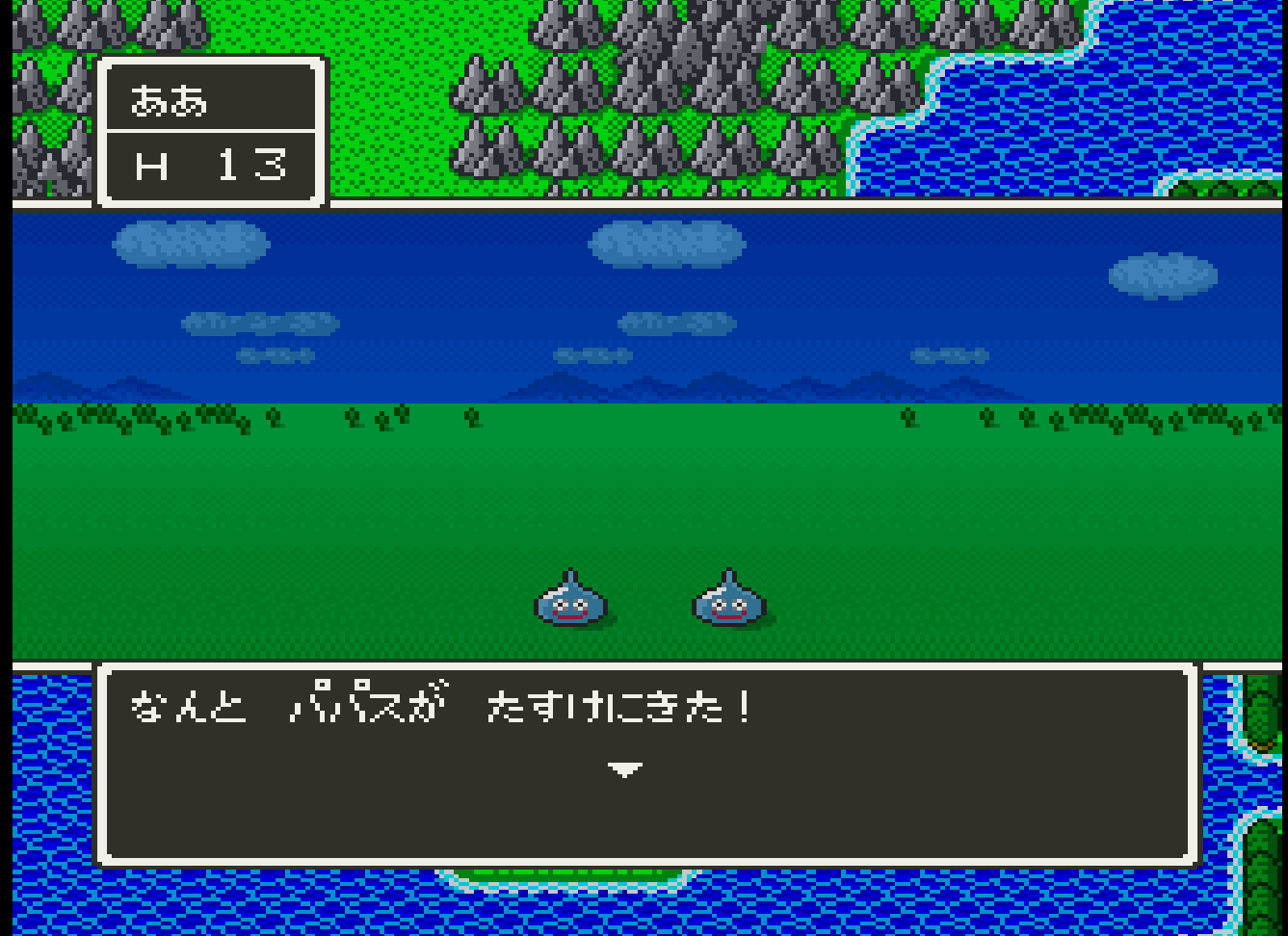
Game screenshots captured by the author. ©ARMOR PROJECT/BIRD STUDIO/SQUARE ENIX
Find original hardware editions on eBay
As an eBay Partner Network affiliate, Enkeisha may earn a commission from qualifying purchases made through these links.
Search eBay listings (affiliate link)
Check the language, region, hardware compatibility, condition and authenticity before buying. Search results may include reproductions; links do not endorse individual sellers.