Kouji Mori · Hakusensha · Complete in 18 volumes
Holyland
The Boy Shimokitazawa Knows by Rumor
Read the review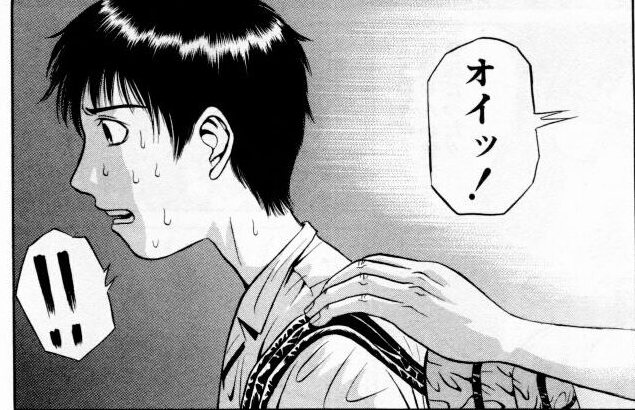
A hand on his shoulder
Someone puts a hand on Yuu Kamishiro’s shoulder, and Kouji Mori makes us turn a page to find out whose it is. By then we’ve spent enough time watching Yuu watch other people to expect trouble. It’s Shin, a boy from school. They go to an arcade. A few pages later Yuu smiles. Around the neighborhood, boys have been talking about a skinny kid who can put people on the ground. None of them has a story quite like this one.
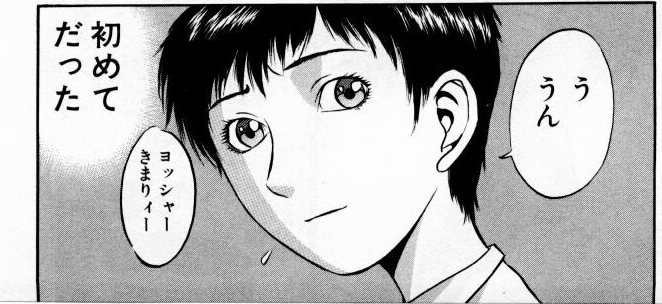
Holyland follows a bullied teenager into the nighttime streets of Shimokitazawa, a Tokyo neighborhood of shops, arcades, and narrow lanes. Yuu brings with him a couple of punches learned from a boxing book. He would like somewhere he can spend an evening. Over eighteen volumes, those two facts get tangled together. The same reputation that makes him feel able to go out brings strangers looking for him, and the friendships he makes give him something to lose each time he goes.
What a rumor leaves out
Volume two takes us back to Yuu’s room. He’s stopped going to school, and he repeats the movements in the book, keeping count so the voices downstairs recede. Mori briefly recalls counting paving tiles in Shinjuku himself. It’s an odd, precise detail. The count gives Yuu something he can get through before he has any idea what a fight might feel like.
After Yuu faces Iwato, talk on the street reduces the encounter to who beat whom. Iwato later sits down with Yuu over hamburgers. Each has noticed something about their fight that the other missed. The food helps. With no crowd waiting for a winner, they have time to explain themselves. The story had sounded simple until you heard from the two people who were actually scared. Mori keeps making room for these conversations, even when another fight is about to start.
The first people who see him clearly
Masaki Izawa carries enough weight in the neighborhood that spectators will ask him to fight when they’ve come to watch someone else. One of my favorite early scenes finds him getting Yuu out of trouble on a motorcycle. They stop by a vending machine, away from the people who wanted to see what would happen. Masaki asks Yuu what he wants to do. There’s a pause large enough for us to wonder what we’d say if the one place we liked going had suddenly become dangerous.
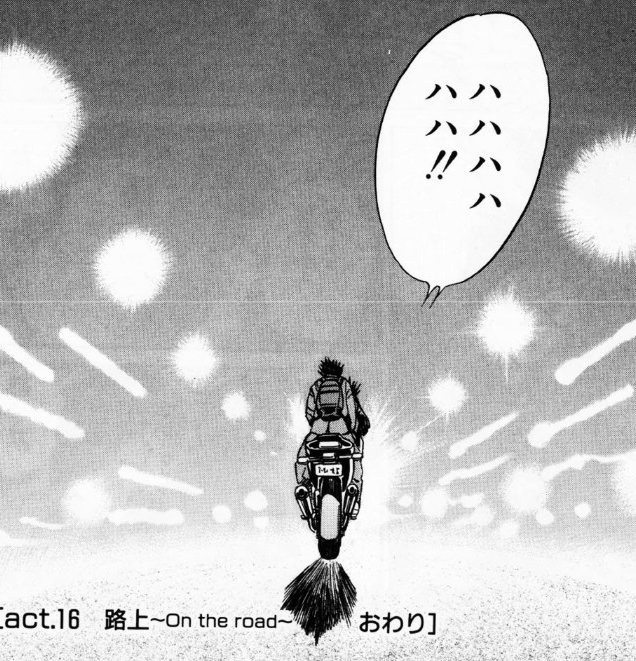
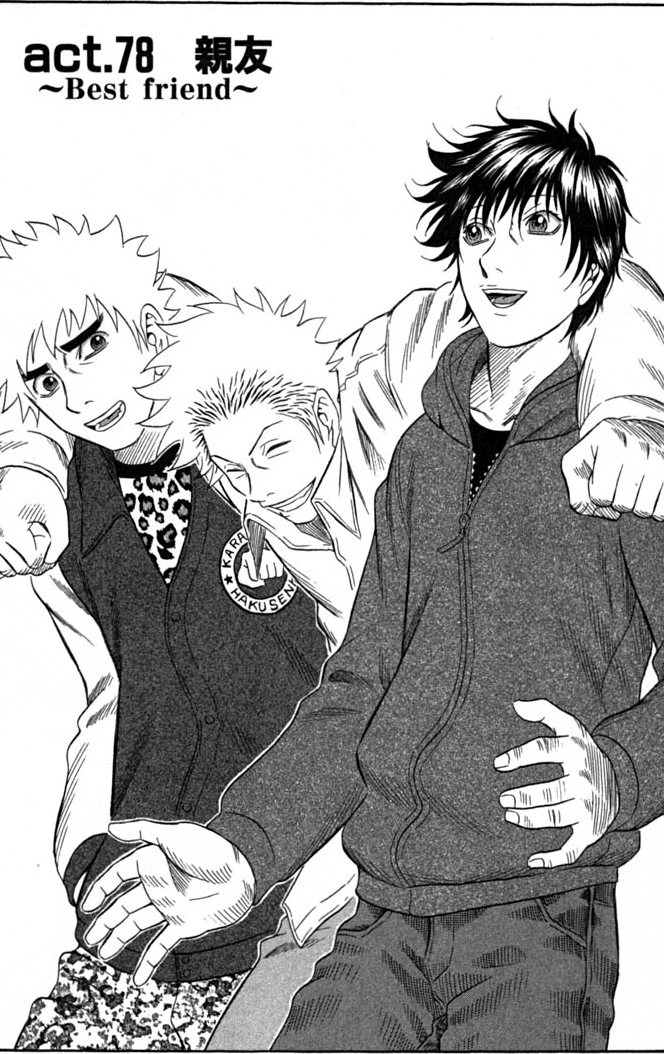
Shogo Midorikawa, a karate fighter, first looks at Yuu and can’t square the thin boy in front of him with the talk on the street. The spectators call for Masaki. Masaki is already watching Yuu get back up. In time, Yuu and Shogo learn what it’s like to stand beside each other as well as across from each other. Mori gives the friendship a physical shape on a chapter title page in volume eight. Shin has an arm around each boy’s shoulders. Later, at the underpass where the three have spent time together, the same two boys want to fight again. Who is Shin supposed to cheer for?
What follows makes me appreciate a scene in volume nine where Yuu grapples with Tsuchiya, a grappler he’s clashed with before. They’re on grass, and Yuu is having enough fun being thrown to remember wrestling with his father as a child. For a few pages there’s room to see what he might enjoy about using his body if his place in the neighborhood didn’t depend so much on what it could do.
A utility pole, a boxing ring, and an audience
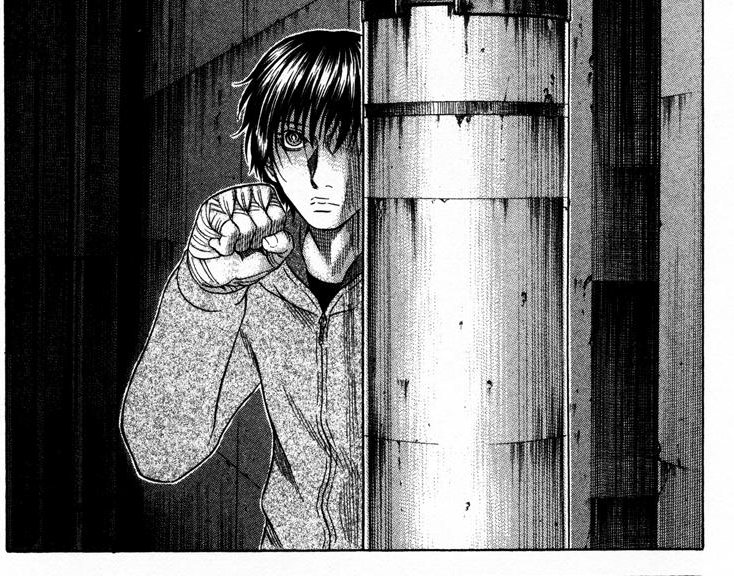
Before he faces the karate fighter Osada again, Yuu stretches both arms out in a back alley. His body gives you the width of the space. When a utility pole comes between them, you already have some sense of what that obstruction will cost a fighter who needs room to turn. Mori can spend several pages explaining what just happened. Occasionally I wanted him to get on with it. At his best, though, he lets the movement surprise you and then gives you a reason to look back at a panel you thought you understood. The pole is there the whole time.
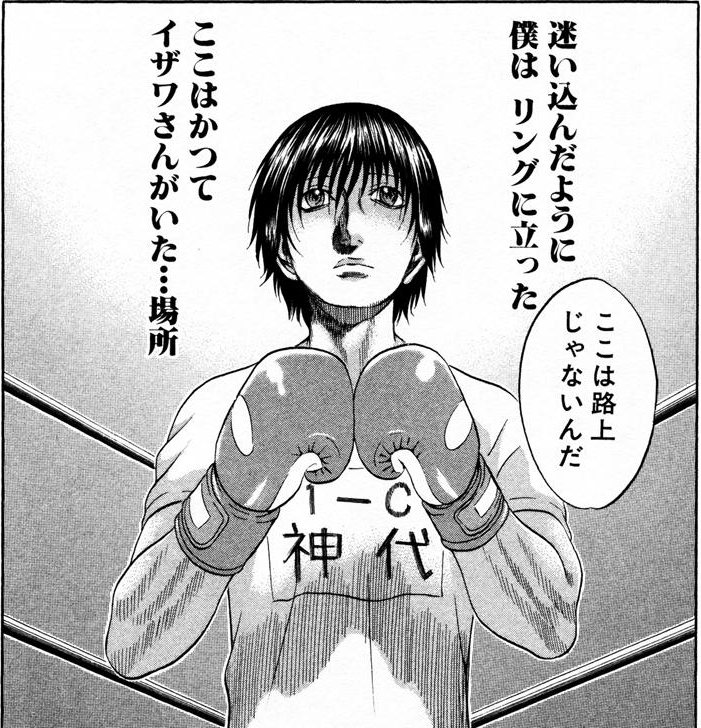
The school boxing ring later in the same volume is so well lit that you can read Kamishiro on Yuu’s gym shirt. A boxer named Kazuma Yamazaki has invited him in. Yamazaki has learned to keep a pace. Yuu has learned to spend everything in a hurry. As the encounter goes on, you can see the difference in the boys’ breathing and in the way Yuu carries his arms. The students watching have their own ideas about what they’re seeing, too. After all those dark lanes, it’s a wonderfully uncomfortable scene to read in full view of the room.
The distance between two people
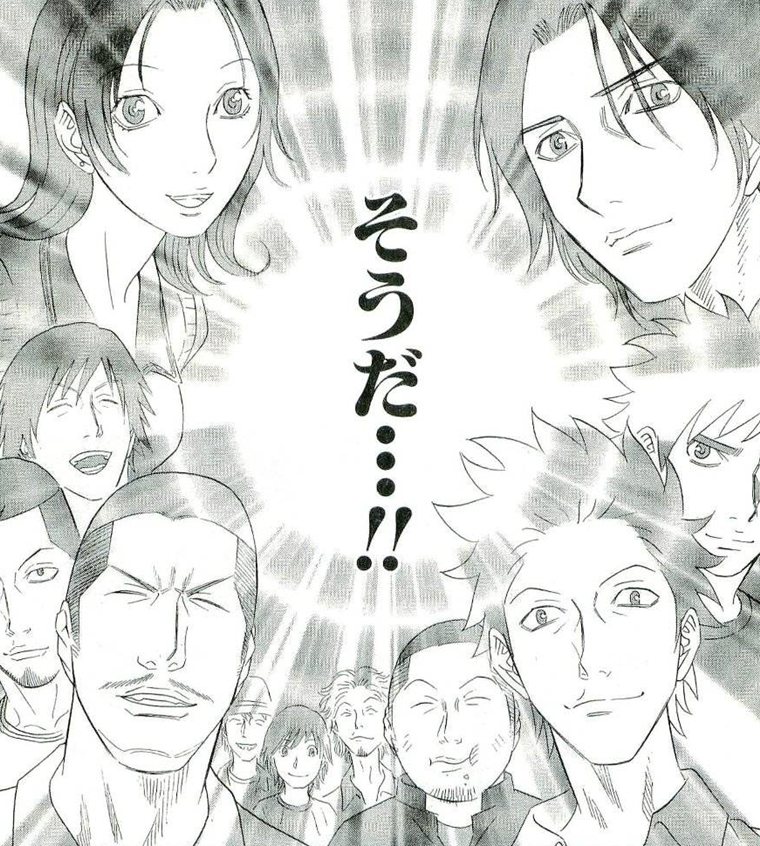
Yoshito Obara, a kickboxer considering a professional career, has his own reason for seeking Yuu out. Before their rematch, Yuu hears people in the crowd call him by name. Mori draws a succession of faces, then gives the standing boy a page to himself. I thought back to the opening, when I had to pick Yuu out from behind the backs of strangers. By now there’s enough history in a single voice from the crowd to make me want the fighters to hold off for one more page.
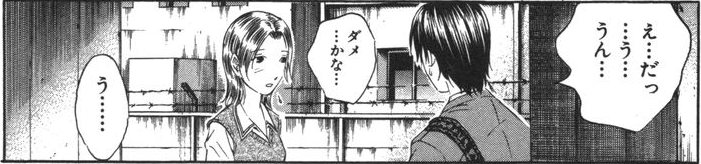
Mai Izawa, Masaki’s sister, knows Yuu from school. Back in volume nine, she steps away from her friends on a rainy night and offers him an umbrella. The more time they spend together, the harder she finds it to reconcile the boy she knows with what she’s seen him do. When they talk under the railway in volume fourteen, there’s a column and a stretch of empty panel between them. Nothing in Yuu’s growing reputation makes either of them any quicker to cross it.
The ending | Spoilers for volumes 17 and 18
Read the final-volume discussion
In volume seventeen, Shogo helps Yuu to his feet. Their hands meet across a page turn. Shogo gives his answer to a much earlier offer of friendship only as he’s being taken away by the police. Later Yuu writes to him. Mori puts him at the desk in the room where he used to count punches, then shows us that room as it was when he had nobody to write to. I’d been reading for eighteen volumes to see where Yuu could go. This quiet return to where he started caught me off guard.
Against King, Yuu keeps drawing on things he learned from Yamazaki, Tsuchiya, Masaki, and Shogo. Each return carries the memory of the person and the place where Yuu picked it up. Afterward he can acknowledge King’s skill and still ask him to account for the people he hurt. Then Masaki meets Yuu at the underpass, acknowledges his victory, and offers his hand. They’ve spent so much of the series meeting after dark that Masaki’s invitation to meet somewhere bright next time makes what follows especially hard to take: Yuu is stabbed on his way to see Mai.
The epilogue circulates conflicting stories about what happened to him. A young man who looks like Yuu comes to another boy’s aid, and Mori leaves him unnamed. What I go back to is the panel where he stops his fist before it lands. The first volume gives the neighborhood a story it can pass around about a boy who hits back. The final pages give us a movement quiet enough that it might never become a story on the street.
Where to start reading
Start with volume one and give it until the arcade scene with Shin. If you find yourself relieved that Yuu gets a little time to laugh, you already have a good reason to read on. Hakusensha lists eighteen volumes in Japanese. As of November 17, 2026, I could verify the Japanese edition and a Japanese digital sample. I couldn’t verify an official English edition.
BOOK☆WALKER Japan generally accepts purchases from outside Japan. Availability and payment options can vary by region.
Japanese-language print edition, not an English translation. Check condition, shipping and seller details.
Find print editions on eBay
As an eBay Partner Network affiliate, Enkeisha may earn a commission from qualifying purchases made through these links.
Search eBay listings (affiliate link)
Listings may include different languages and editions. Check the language, volume numbers, condition, shipping and seller details before buying. Links do not endorse individual sellers.
As an Amazon Associate I earn from qualifying purchases.