Japanese Literature · A reader’s guide
The Spider’s Thread: Mercy, Fear and Selfishness
Kandata once lets a spider live. Later, when he sees a thread that might carry him out of hell, he wants it to himself. In Ryunosuke Akutagawa’s fable, those two decisions happen under very different pressures. Comparing them makes the ending more interesting than a quick lesson about selfishness. This article discusses the ending.
Enkeisha Editorial ·

What the Buddha remembers
Kandata’s earlier decision is small. The spider is in his way, but he can step past it without giving anything up. The Buddha remembers that one occasion when he spared a living thing. The thread gives Kandata another chance to decide what another life is worth, this time when he has something to lose.
Why Kandata calls the thread his
When Kandata looks down, other people are climbing after him. He fears the thread may snap under their weight, so he claims it and orders them off. The fear makes sense. What’s striking is how fast an opportunity he received from someone else begins to seem like a possession he can keep. Until he speaks, the other climbers haven’t asked him to decide for them.
What breaks at the end?
The thread breaks just after Kandata shouts. The narrator later draws attention to his lack of compassion, while the pond in paradise continues as before. On a second reading, mark the point where Kandata goes from worrying about the thread to telling others it belongs to him. What changes in that instant? The question leaves room to consider fear alongside selfishness.
A question to take to a reading group
Imagine the climbers can hear one another clearly. Would Kandata have a better chance if he asked them to wait or space out? The story never stages that conversation. Imagining it makes his actual response, and the speed with which he makes it, easier to notice.
Related books, materials or games
Books & stories
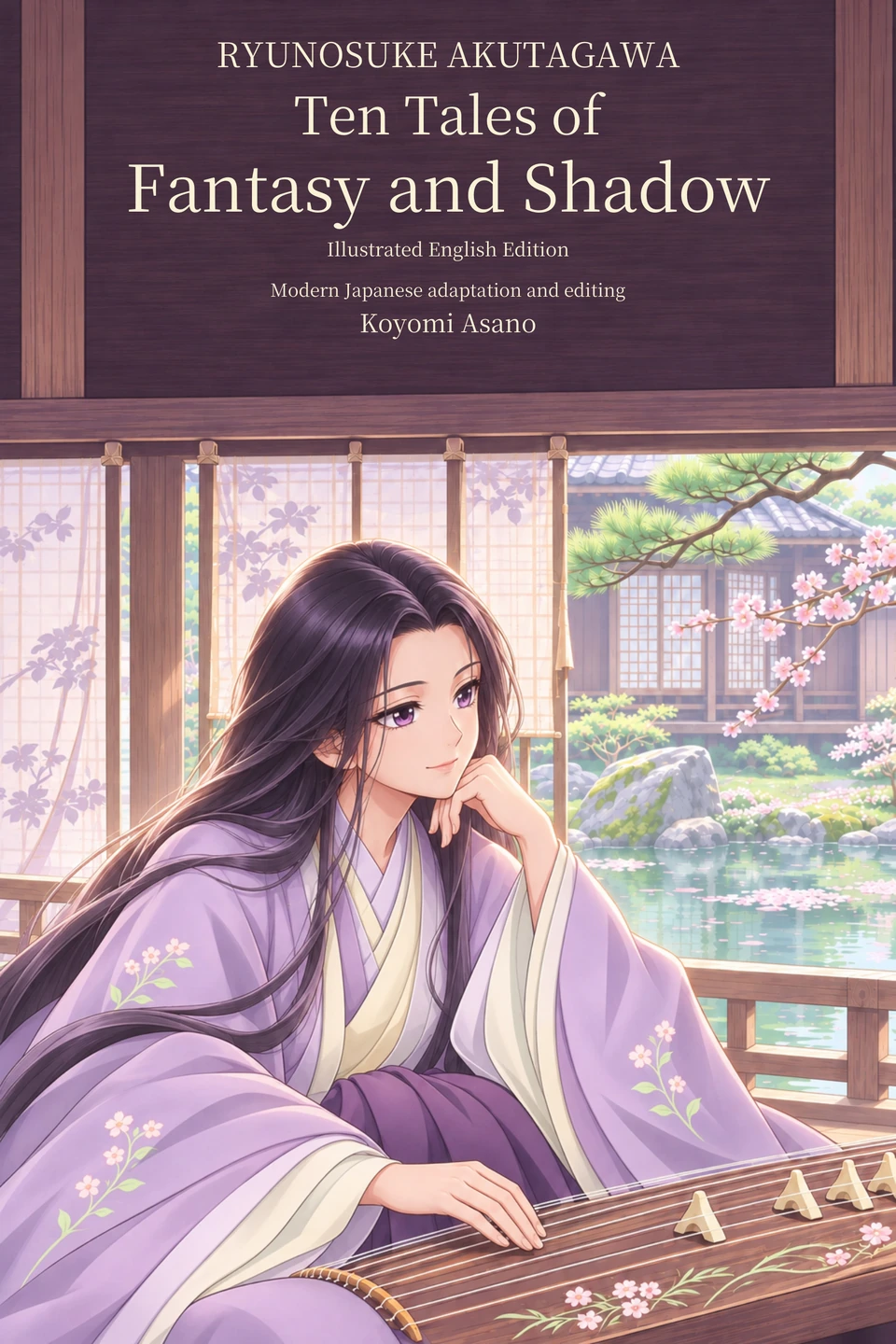
Ryunosuke Akutagawa: Ten Tales of Fantasy and Shadow
Ten Japanese short stories in English, adapted and translated by Koyomi Asano. Includes 60 illustrations and reading notes for six stories.
Explore the illustrated edition →