Japanese Literature · A reader’s guide
Akutagawa’s “Magic”: Two Rainy Nights in Tokyo
On a rainy night in Ōmori, a visitor watches a flower lift out of a worn tablecloth. A month later, on another rainy night, the same visitor is showing off in a bright Ginza club. Ryunosuke Akutagawa gives the two scenes the same weather and a different audience. Listen to the rain to hear how much has changed.
Enkeisha Editorial ·
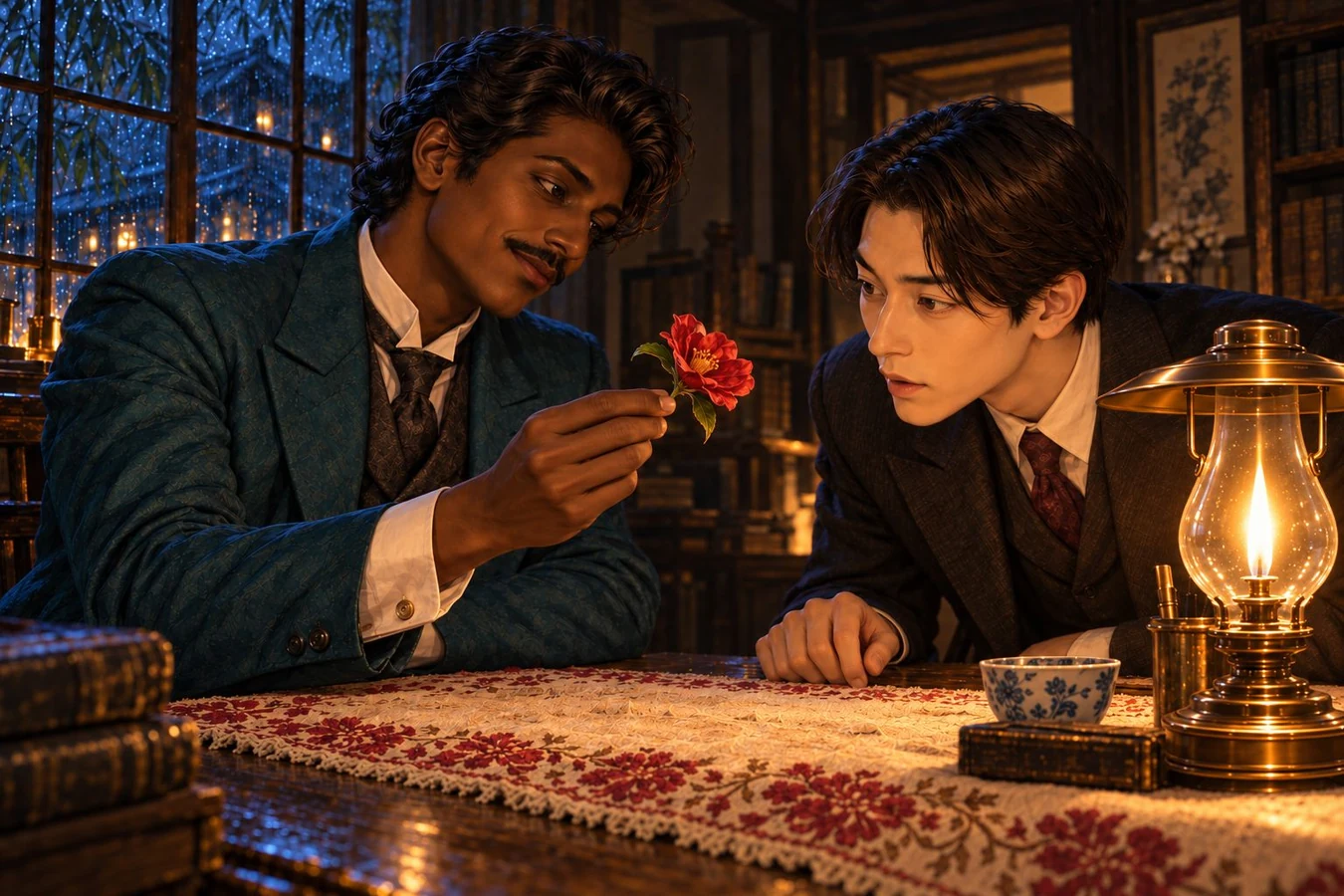
Ōmori: A room where you can hear the rain
The story follows a rickshaw through dark, steep streets to a small house surrounded by bamboo. Inside, an oil lamp lights a threadbare tablecloth, and the visitor can hear the rain outside. When Misra lifts a woven flower from the cloth, the visitor leans closer and even notices a scent. Akutagawa has already made the room familiar enough for that small break with ordinary life to stand out.
Ginza: A room with an audience
At the club, electric lights shine on polished parquet. The narrator remarks that the rain among the passing cars and carriages sounds different from the rain on the bamboo. His friends draw their chairs closer and ask him to perform. He obliges, and the sound that overtakes the rain outside comes from the floor inside: the clatter of coins. The quiet attention of the first visit has turned into a group judging what the trick is worth.
Who wants something from the trick?
Misra brings a borrowed French novel fluttering across the room and returns it to his guest. In Ginza, a friend proposes a card game to decide what should happen to the coins. Put those two exchanges side by side on a second reading. One returns something that already belongs to someone else. The other turns a demonstration into an argument about who should get to keep what it produced.
What to listen for on a reread
Find the second mention of rain, then follow the changes in light and sound through the club scene. Pay attention to what the narrator notices when he is watching Misra and what he says about himself when people watch him. Misra’s warning about desire gives you a reason to listen for that shift even before the narrator reaches the card table.