Japanese literature · A reader’s guide
Rashomon vs. In a Grove: The Two Stories Behind Kurosawa’s Film
If you look up the story behind Akira Kurosawa’s Rashomon, you’ll find two titles. Ryunosuke Akutagawa’s Rashomon supplies the ruined gate and an unsettling encounter. In a Grove supplies the crime and the witnesses who disagree about what happened. Start with the one that sounds more like the film you remember.
Enkeisha Editorial ·
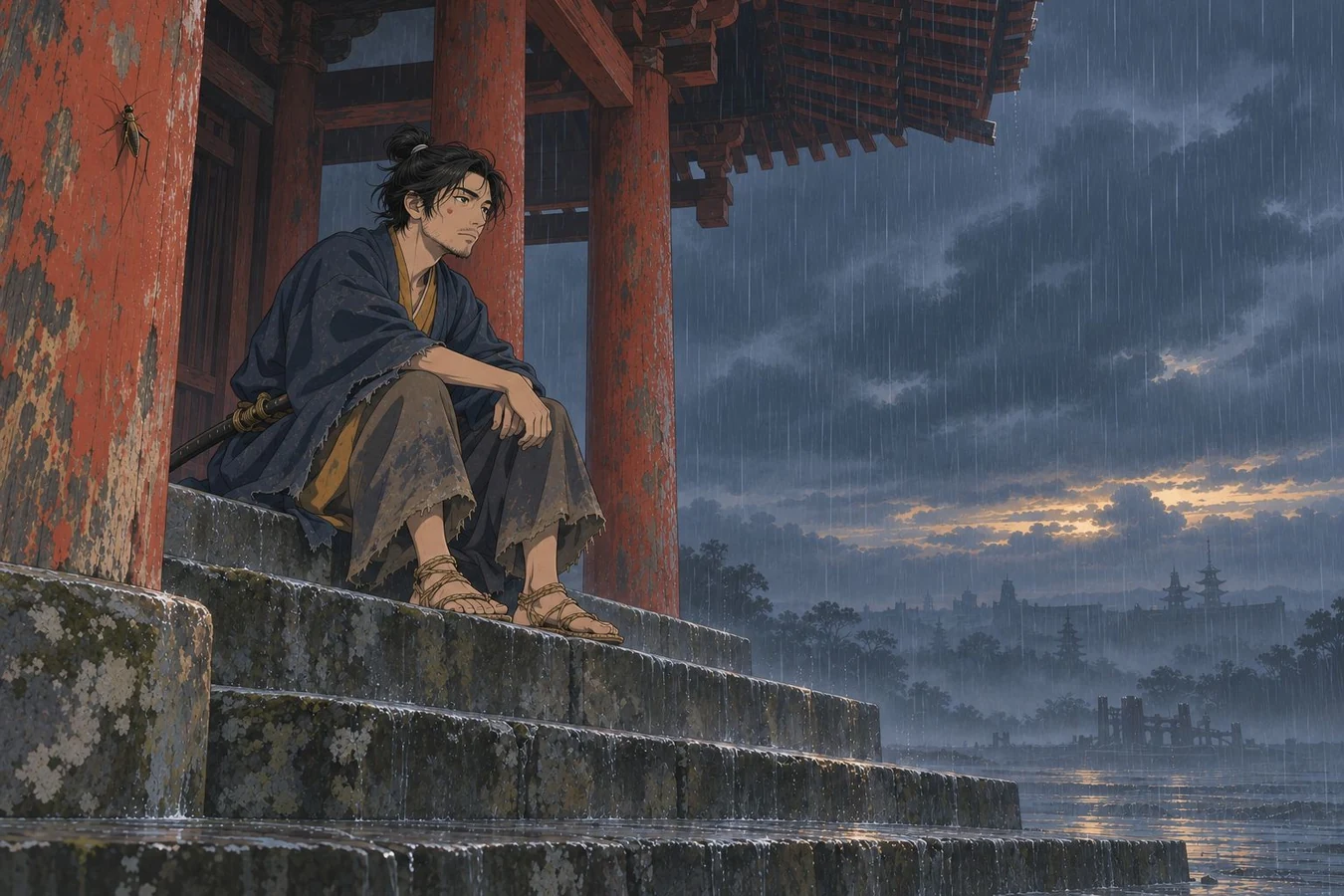
Rashomon: a man waiting for the rain to stop
The short story opens with a servant at a gate in Kyoto. He has lost his livelihood. Even if the rain stops, he has nowhere to go. The gate offers a little shelter, until he discovers someone upstairs trying to survive in a way he finds revolting.
The story narrows to one encounter. As you read, keep track of what the servant thinks he could never do and what the old woman says people will do when they are desperate. She offers him an argument that could take on a life of its own.
The illustration on this page shows how much of the opening is spent waiting. The servant sits almost at the edge of the image. The steps and pillars take up most of the space. It’s a good scene to come back to after you’ve read the story and know what he does when he finally moves.
In a Grove: a death told several ways
A woodcutter finds a body. The first statements give you objects, places and scraps of what people saw. As the story passes to people more closely involved, their accounts become fuller and harder to reconcile. Each statement sounds plausible in isolation. Read the next one, and a detail you thought you could rely on may suddenly look different.
A useful way to read the story is to notice where each speaker starts. What does that person establish before telling you anything about the death? The early accounts can tell you who passed through the area or what was left on the ground. The later ones ask you to trust people who have much more at stake in how the story is remembered.
What the film does with the two stories
Kurosawa brings the disputed death into a story people tell each other while sheltering at the gate. The rain gives them time to argue about what they have heard. A story about conflicting accounts becomes a conversation about what to make of them.
The film also lets you watch incompatible versions unfold on screen. The written statements in In a Grove let you do something different. You can stop between speakers, turn back a page, and compare what each person claims to have seen. The tension survives the change of medium because each new account asks you to revisit the last one.
Which story should you read first?
Start with In a Grove if the film made you want to compare the witnesses. Start with Rashomon if you remember the gate and the feeling of being stuck there in the rain. Each stands on its own, and reading them together makes it easier to see what the filmmakers borrowed and what they added.